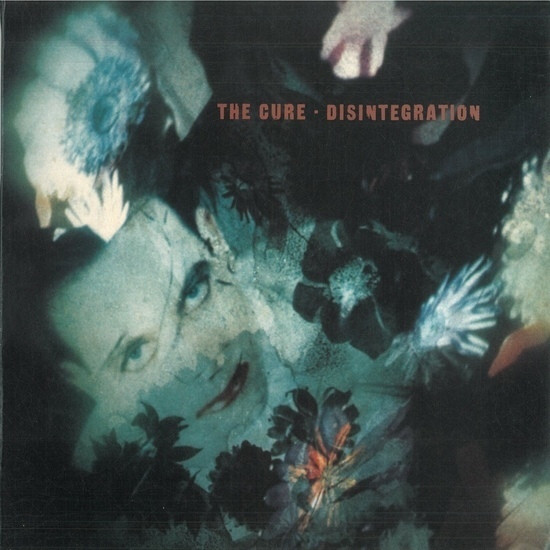
Like most people who grew up when what is now called “classic rock” was new, I’ve grown accustomed to hearing some very incongruous music in public places. I think it was back in the ‘70s when I first heard an easy-listening instrumental version of a Dylan song in the background music of a dentist’s office or a shopping mall. It’s still a bit amusing to hear something that was rebellious and subversive in its day so domesticated, like hearing a Black Sabbath riff from a high school band at a football game (very common). But it’s not usually a shock anymore.
One night in the grocery store back in 2006, though, I was shocked. I realized I was hearing “Pictures of You,” from The Cure’s Disintegration, a sad song from an album which would surely be among the candidates for saddest pop album ever made. If I were the only voter in that poll, Disintegration wouldn’t win—it would come in behind the Julee Cruise/David Lynch/Angelo Badalamenti collaboration Floating Into the Night, which is the saddest pop music I’ve ever heard, too sad for me to listen to very often. But Disintegration would definitely be in the top ten or so.
So I stood there in front of the dog food, half-hypnotized by “Pictures of You,” then began to smile when I thought about what the CEO of Food World might think about a store providing these lyrics as an accompaniment to the grocery shopping experience:
Remembering you
fallen into my arms
crying for the death of your heart
You were stone-white, so delicate,
lost in the cold,
you were always so lost in the dark
On the album, "Pictures of You" is 7 1/2 minutes long. A single, two minutes shorter, was fairly successful. This is the single version. If I remember correctly, the biggest difference is in the length of the instrumental intro, which I think is very effective in establishing an atmosphere before the vocal begins. But the single version is good enough to give you a feel for it:
Disintegration was released in 1989. As with Jane Siberry's The Walking, my acquaintance with Disintegration came by way of a younger co-worker at the time, who made me a mixtape of then-contemporary music in the generally goth-industrial sort of vein. If I remember correctly, the track "Plainsong" from Disintegration was the first thing on the tape, as it is on the album, and it very effectively sets the mood: a long dirge-like thing, mostly instrumental with some half-mumbled words of which "so cold" are the most distinct.
There was a lot of good stuff on that tape, including at least one group who will appear later in this series. And I think it also included "Fascination Street," a darkly catchy picture of the night-club party life as a sort of dance of death: "Let's move to the beat like we know that it's over."
I find it amusing that the ghoulish-looking singer, who is also the main writer, is named Robert Smith.
A couple of years later my old friend Robert (not Smith), with whom I'd always shared a definite leaning toward the melancholy, sent me a tape of the whole album, and I found that I liked it a great deal, and moreover that it's one of those pop albums that carries a definite sense of unity. It's a unity of gloom, very effectively portrayed, and insistently melodic. It manages to sustain a basically similar style and sound through its hour-plus length without becoming monotonous. As I tend to find CDs (that is, albums originally produced for CD) too long, this is a relatively unusual thing for me to say. (I did eventually buy the CD.)
Toward the end, the 8-minute-plus title song gives us a picture of "stains on the carpet and stains on the memory." Enjoy!
–Mac is the proprietor of this blog. This is a somewhat expanded version of a post from 2006.
 Light On Dark Water
Leave a comment