Maybe it's the result of early imprinting, of the fact that moody, mostly black-and-white, mostly European films from the '50s and early '60s were more or less the definition of "art film" when I was in college in the late '60s and first encountered the concept and the thing itself. I remember seeing this one back then, and I remember that it had some strange music and that it was moody and poignant. That was all.
So I have occasionally over the years recalled it and thought I'd like to see it again, and I finally have. When we first joined Netflix it was listed, but when I put it on our queue it went into that mysterious list called Saved in which the Availability column is always Unknown. Some months ago it finally moved into the Queued list, and I've now seen it. (Thunder Road, a very different movie but one of which I have older and yet more powerful memories–a formative influence in the 8th grade, I think– remains in Saved limbo–or, rather, I suppose, purgatory.)
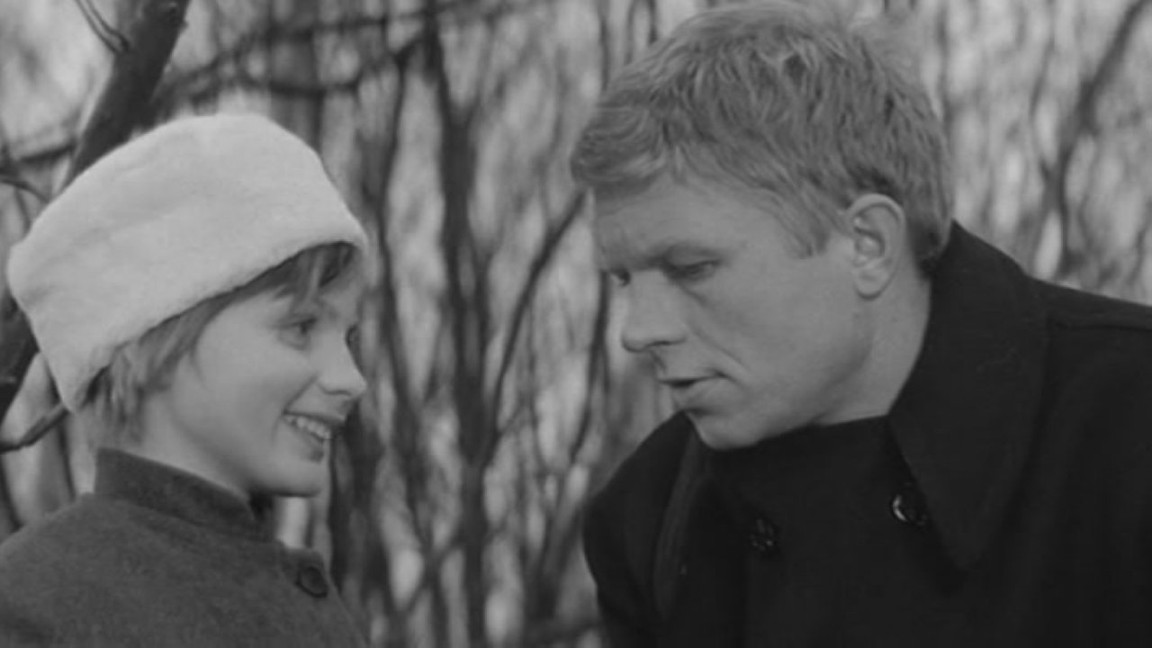
Sundays and Cybele is French, and the title is not only not a good translation of the French Les Dimanches de Ville D'Avray, but a spoiler. You aren't actually supposed to know that name until near the end of the movie. That complaint aside, it is even better than I had hoped. It is a very, very beautiful film, with some of the most evocative black-and-white photography you'll ever see. But it is also very, very sad. And I mean that as a warning, so don't say I didn't.
The Criterion Collection description is as apt as anything I could come up with:
In this provocative Academy Award winner from French director Serge Bourguignon, a psychologically damaged war veteran and a neglected child begin a startlingly intimate friendship—one that ultimately ignites the suspicion and anger of his friends and neighbors in suburban Paris. Bourguignon’s film makes thoughtful, humane drama out of potentially incendiary subject matter, and with the help of the sensitive cinematography of Henri Decaë and a delicate score by Maurice Jarre, Sundays and Cybèle becomes a stirring contemplation of an alliance between two troubled souls.
The veteran, as we are shown in the opening scene, was a bomber pilot who may have killed a young girl. I think that may have happened in Vietnam, though we aren't told. The eleven-year-old girl has been abandoned by her parents. Their connection is a chance for him to somehow atone for the death of the girl he (presumably) killed, and for her to find the father for whom she longs. The relationship is sweet and innocent–I was a little concerned that it was going to go in a perverse direction, but it does not. Yes, there is a subcurrent of potential sexuality in it–the little girl has a kind of crush on the man, wants to marry him (when she's eighteen), is jealous of him (and he of her), and such–but it's unconscious, and remains something that might develop in the future.
I want to watch it again but the DVD has been here for almost three weeks and I'm not sure I'll have time in the next few days, and I hate to think that I'm keeping it from someone who might like it as much as I do. (I figure Netflix doesn't have many copies of something this obscure.) I've actually thought about buying it, which is the best recommendation I can give, since I don't buy many DVDs and my collection consists of Bergman, Fawlty Towers, and some Doctor Who episodes (Tom Baker period).
 Light On Dark Water
Leave a comment