Some Interesting Words from Eve Tushnet

Well, of course, the Catholic neighborhood of the Internet is still ablaze with commentary about the synod, and I'm certainly not going to attempt any summary, especially as I've only read a little of it. But this from Eve Tushnet, which someone posted on Facebook, caught my eye. I don't necessarily agree with all of it, but it is interesting, because she's a gay Catholic who wants to follow the teachings of the Church, and yet without repudiating what she sees as an essential part of her nature.

I admit that I really don't see a good resolution for that problem. One thought the question provokes, though, is that her vision of some sort of place for "celibate partnership" (there's a link to further discussion of that idea in her piece) is something that I can see more easily workable for lesbians than for gay men. Despite the abundant evidence, most women don't really understand just how commanding and obsessive the male sex drive is. They may understand it as an observed datum, but since they don't experience it, they still tend to underestimate its power.

Eve Tushnet has a book out, by the way, which I'm sure would be interesting.
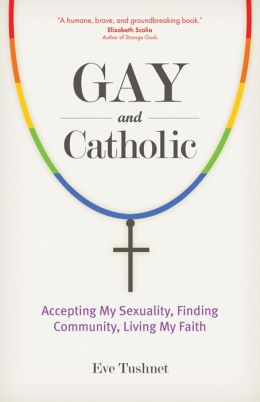
EveTushnetBook

216 responses to “Some Interesting Words from Eve Tushnet”

  1. That was one of the few things about the Synod that I’ve seen on Facebook that I was tempted to read, but I didn’t read it. I’m trying to be really strict with myself about this.
    But, I think you are right about celibate partnership being unlikely for men. I can’t remember if we have discussed this, but I don’t think lumping gay male relationships and lesbian relationships together as the same thing is a mistake. They seem almost the opposite to me. I think that gay male relationships may tend to be too dangerous, while lesbian relationships are too safe.
    AMDG

  2. Marianne

    Despite the abundant evidence, most women don’t really understand just how commanding and obsessive the male sex drive is. They may understand it as an observed datum, but since they don’t experience it, they still tend to underestimate its power.
    Movies and TV series that have featured male gay relationships have usually built on that misunderstanding, and have portrayed them as domesticated in a female sort of way. Modern Family is a good example, and also Will & Grace. I’m pretty sure this has played a very large part in the rapid acceptance of the idea of gay marriage.

  3. You’re probably right. I’ve never seen either of those shows, but I recognize the pattern. One of the things that annoyed me about…oh heck, what was the name of that movie?…roses, Kevin Spacey’s wife kills him…anyway, there was a gay couple in that one, not very prominent, but they appeared nice and normal and domestic, while everybody else was psycho.
    “gay male relationships may tend to be too dangerous, while lesbian relationships are too safe”
    Now that’s an interesting way of looking at it. Never would have thought of it that way, but I think you’re right.
    I watched part of some documentary (PBS, probably) a while back about the early days of the gay rights movement. They described the lengths to which men were “forced” to go for sex. One of them involved an unused semi trailer that dozens of them would cram into and do whatever. I can’t see lesbians going in for that sort of thing to anything like the same degree.

  4. No, there’s been some research done that says lesbian couples have sex less than any other kind of couple, and that committed couples frequently quit having sex altogether. Of course, there are lesbian groups that protest that study. I don’t know but I have second-hand knowledge of that in a few cases. That doesn’t make me exactly an expert. 😉
    AMDG

  5. Good. There is a phrase coined by some researcher: “lesbian bed death”

  6. Yes. I was avoiding using that. Not sure why.
    AMDG

  7. I deliberately used it because I think it’s funny.

  8. The first and only time I ever heard that term was during a discussion of that Joseph Bottum article about how we ought to stop fighting against gay marriage because that battle was lost, or something like that. A friend was saying that her lesbian friends said that bed death was frequent, and then she said, “You know that term, don’t you.” No. The lesbians I know have never discussed their sexual activity or lack thereof with me. Nor, come to think about it, have any of my other friends, for which I am profoundly grateful.
    AMDG

  9. I don’t know if I’ve been warped by the study of history or of grammar, but I can only think of “bed death” as something blessedly distinct from “roadside death”. Do these people even know how noun clusters are formed in English? (Or do they walk into shop windows when they need a window shop?)
    It’s obviously a misuse of the word “death”, but it also shows a profound ignorance (or one-track-mindedness) concerning beds, which are places of birth and death and care of the sick, and sleep and dreams and reveries and fretting, and prayer and breakfasting and the opening of presents, and who knows how many non-sexual activities. Do the people who coin such usages have no lives but sex-lives?

  10. “One thought the question provokes, though, is that her vision of some sort of place for “celibate partnership” (there’s a link to further discussion of that idea in her piece) is something that I can see more easily workable for lesbians than for gay men. Despite the abundant evidence, most women don’t really understand just how commanding and obsessive the male sex drive is.”
    Right. I like Eve Tushnet, but I do think she needs to accept that her sexuality itself is in need of healing. That doesn’t mean it will be, necessarily, although it could be. Everybody has a cross to carry and some crosses are at least as heavy, if not heavier than a disordered sexuality.
    “The lesbians I know have never discussed their sexual activity or lack thereof with me. Nor, come to think about it, have any of my other friends, for which I am profoundly grateful.”
    Quite! Such a horrid thing when people want to tell you about their sex lives.
    “It’s obviously a misuse of the word “death”, but it also shows a profound ignorance (or one-track-mindedness) concerning beds, which are places of birth and death and care of the sick, and sleep and dreams and reveries and fretting, and prayer and breakfasting and the opening of presents, and who knows how many non-sexual activities. Do the people who coin such usages have no lives but sex-lives?”
    Excellent!!

  11. Apologies for the unfortunate typo! I really should preview my comments. Sloth strikes again!

  12. Hah! I had to re-read your comment to even see it. I’ll change it if you like.
    “Do the people who coin such usages have no lives but sex-lives?”
    Well, that’s the thing, the huge thing about what the whole progressive mind-set has become: the right to sexual pleasure has become their only real absolute. Maybe I should say “almost their only”, but I’m really not sure that the qualification is required.

  13. “I like Eve Tushnet, but I do think she needs to accept that her sexuality itself is in need of healing.”
    Yeah, that’s the hard fact that I would like to avoid saying, but I don’t think I can in honesty. A couple of people in the comments on that NPR story about the synod that I remarked on in a previous discussion mentioned how offensive the term “intrinsically disordered” was to them. And Eve objects to it, too. But it just seems inescapably accurate to me. It’s not by far the only kind of sexual disorder we experience, and pretty much every man is chock-full of disordered desires, so there’s no place for self-righteousness. But it is disordered, and though having it, especially to the point of having little or no interest in the other sex, is a really tough situation to be in, it can’t be made into something it’s not.

  14. “Yeah, that’s the hard fact that I would like to avoid saying, but I don’t think I can in honesty.”
    Sometimes the truth just is hard either to hear or say, but it’s for the best if we can say it as kindly as possible. And it’s no insult to Eve or anyone else to say that she needs healing. We all need healing, as you’ve basically pointed out.

  15. Yes, please do change the typo, if you don’t mind. Sorry for the bother!

  16. Done. No problem.

  17. Thanks 🙂

  18. Before Eve Tushnet, there was a guy on the internet called David Morrison. He wrote a book called Beyond Gay. He was kind of like a male Eve, so to speak. He was a celibate male gay Catholic living with his gay partner. He had a ‘Beyond Gay’ blog and in the end he had to take it down, I think because the gays kept criticizing him for being celibate and the Catholics kept criticizing him for living with his partner and said how dangerous it was and how intrinsically disordered people like him are in need of healing and should change

  19. I remember seeing his name around, but I don’t think I ever read anything by him. That’s a shame that people were harsh with him. I wouldn’t criticize any specific person’s attempt to live celibately with someone to whom he or she was sexually attracted, but it just seems like common sense to observe that in general the idea is a risky one–“risky” in that it would be difficult to stay celibate. If Eve, or David Morrison can do it, God bless them, but I had the impression Eve was proposing it as a wider practice, and I’m skeptical. I certainly could not, at any time between the ages of, say, fifteen and sixty, have done it. (The fires are burning rather lower now, but even so….)
    Here is something by Morrison that looks interesting, though I haven’t read it yet. I don’t see a date on it.

  20. In that article Eve says “I’m pretty sure my own love of the Church as the Bride of Christ is more than a little queer.”
    What does that mean? People on the radical social left are always saying that sort of thing, often in a sly kind of way, but what on earth are we supposed to take that to mean coming from someone who proclaims herself to be an orthodox Catholic who accepts the Church’s teachings on sexuality?

  21. I didn’t know what to make of that, either. I mean, it apparently means that as a woman she loves the Church in its guise as a woman. But that isn’t the relationship that we have to the Church. And we can’t have the relationship to the Church that the Bridegroom has.

  22. I mean, I’m a straight man, and my relationship to the Church is not the not-queer version of what she seems to be saying.

  23. Yeah I am baffled how she could think that statement is benign or even humorous. It just seems really misguided and nonsensical at best and–sorry to say–indicative of a kind of intrinsically disordered perspective. It reminds me of how some kids of 14 go through a phase where they can’t look at anything longer than it is wide without snickering. They see the phallus everywhere because they are immature and obsessive, ruled by hormones and feelings that run out of control, lacking the advanced cognitive skills to channel the obsession into more socially acceptable outlets.
    Tushnet and the other writers in her sort of loosely affiliated school of thought (Wes Hill, etc) throw me for a loop frequently because of their asides and comments like that. They make a big deal out of being orthodox and yet there’s this up the sleeve snickering and affection for the baser aspects of “gay culture”…I can see why some see their group as deceptive or at least self-deceiving to some degree.

  24. I took her to be using the word “queer” in its primary meaning. Or do people not do that any more in the US?

  25. No, I’m sorry to say, we don’t. “Homosexual” is the primary meaning of the word now. Anyone attempting to use its original meaning would probably feel obliged to note the fact, and there would be smiles and chuckles.

  26. As for that “school”, I really wasn’t aware that there is one–E.T. is the only one of these writers I’ve read, and I haven’t noticed a lot of that sort of thing with her. But the general 14-year-old-snickering syndrome was something I noticed immediately when I was first around openly (more or less) gay men in college. They were constantly turning innocent turns of phrase into sex-related jokes. That’s a male tendency in general, but it seemed a lot more pronounced with them, and I found it kind of annoying.

  27. My recollection is that David Morrison quit blogging for the same reason most do (he’d run out of things to say) and because he was in the midst of financial and vocational problems.
    You never know, though. The embarrassing thing about this hobby is it records the vicissitudes of life. The fellow who ran the blog The Cafeteria is Closed later slid into some wretched revisionist Catholicism; I’m not sure he hasn’t left the Church. The fellow who offered Diary of a Suburban Priest works as an interpreter for the deaf and is in civvies; I gather he’s either suspended, laicised, or over the wall.
    I do not generally approve of making a public point of one’s esoteric problems, but Morrison always struck me as on the level and fairly level-headed. Some of these other characters seem a mess (“Courage Man”) or a mix (in varying proportions) of gassy, shifty, and exhibitionistic (Joshua Gonnerman, Melinda Selmys). It leaves you wishing to God they’d write about something other than themselves. It seemed for a while that someone on the editorial staff of First Things was taking an indordinate interest in this coterie and commissioning a mess of contributions from them (before R.R. Reno elected to make First Things more truly and thoroughly soporific.

  28. The school of thinkers I am thinking of hangs out on and around the spiritual friendship dot org blog. And yeah, they have been heavily featured on First Things recently. They have a few tropes they like to revisit frequently. One is this idea that if only normal families in churches would “open their homes” to homosexuals pursuing a celibate life, everything would be right and just. That somehow having your own nuclear family and not going out of your way to show “hospitality” specifically to unmarried homosexuals is why celibacy doesn’t work for people, the problem is all these “closed off” selfish moms and dads wanting to have a family life and not thinking about the good that could come from a Gay Uncle So and So…something like that. Honestly I have always had trouble making sense of what exactly the thesis is. It comes off like a whine.
    Another one they like is the idea that while gay sex is morally wrong, there’s something inherent about being gay, other than wanting sex with someone of the same sex, that is special, maybe magical, and is a gift of some sort. How this could be defined beyond stereotype (sensitive artistic males…female with leadership potential?) is never really nailed down. It’s just a certain gay je ne sais quoi that they proudly claim.
    Of all of them I admit Melinda Selmys puzzles and confounds me a great deal. She is married and has, as I recall, 6 children. But she seems to still totally define her identity around her same sex attraction, her history as a formerly active and apparently militant lesbian, and her “gender nonconformity.” Which…how gender nonconformist can a mother of 6 in a chapel veil actually be? It seems like a lot of unhealthy navelgazing, but is applauded in some “thoughtful young Catholic” circles as being very cutting edge, real, raw, and insightful. I’m technically on the younger side myself but it all just escapes me. I feel like (based partially on reason and discernment, partly on personal experience with growing up and getting over difficult crap) these folks are willfully holding themselves back by harping in this way. But when I have dared to butt into conversation in those forums, I am told I just don’t know what pain is, etc.

  29. like a lot of unhealthy navelgazing,
    Yep.
    For your amusement, click on the comments and search for “Sundaram”.
    http://www.firstthings.com/web-exclusives/2012/05/dan-savage-was-right

  30. I am told I just don’t know what pain is, etc.
    Well, you aren’t Special.

  31. I’m not very familiar with this scene y’all are describing, and don’t even recognize most of the names, so will refrain from comment on that. But this is something I’ve noticed, and been bothered by: “…the idea that while gay sex is morally wrong, there’s something inherent about being gay, other than wanting sex with someone of the same sex, that is special, maybe magical, and is a gift of some sort.”
    This is the note that was sounded in the interim document from the Synod, and that to me was a signal that something seriously off was involved. To say that homosexual men and women have gifts that can be of service to the Church is fine, and true. But to say that homosexuality is itself a gift is a different matter. In some more or less mystical sense it is true, in that even our defects are a part of what we are, and can cause us to see some aspect of God that no one else does. One sometimes hears people with serious physical handicaps say things like that, for instance. But no one tries to make a blanket statement that having a serious physical handicap is an intrinsically good thing.

  32. I only skimmed the FT piece, and the long long long long comment from Sundaram. On the basis of that, the piece seemed ok. Asking for extra reassurance, yes, but I can understand why someone in that circumstance might want it. There are plenty of Christians who will be harsh and decidedly unwelcoming.

  33. “…the idea that while gay sex is morally wrong, there’s something inherent about being gay, other than wanting sex with someone of the same sex, that is special, maybe magical, and is a gift of some sort.”
    I did have a laugh when I saw someone’s facetious comment recently, “Have they discovered yet that gay sex is miraculous?”
    BTW, I Am Special, just in case y’all were wondering. 🙂
    But to be a little more serious, “But no one tries to make a blanket statement that having a serious physical handicap is an intrinsically good thing.” Right. I know that God has brought about some good things in my life out of bad things which happened, but I would never think of those bad things as being in themselves good.
    “This is the note that was sounded in the interim document from the Synod, and that to me was a signal that something seriously off was involved.”
    Right.

  34. Yeah and it bothers me that no one can describe or explain what this gift of essential gayness (separate from illicit sexual attraction) might be and how it is distinct from the more general category of “insights gained from outsider status” or “overcoming a hardship with spiritual integrity.” It reminds me of how once we all thought of bullying as something that kids do to anyone who “sticks out” but now “bullying” has become a dogwhistle among the social justice types for “homophobia.” Sure, the fat guy and the nerd girl get picked on too, but it’s somehow lacking both the spiritual profundity and the political emergency of the gay kid’s suffering at the hands of bullies.

  35. Don’t worry, Louise, we knew. 🙂
    I’m willing to overlook this notion of gayness as a gift in what I hope is the correct spirit of “gradualism.” For anyone of homosexual orientation to embrace the Church and accept the teaching that homosexual acts are wrong is a huge step, especially in a cultural climate that teaches homosexual acts are wonderful and to be encouraged, and that any suggestion otherwise is “homophobia”. I have my doubts as to whether it’s a stable or sustainable position over the long haul (I mean the gayness-as-gift notion), but I’m willing to let it go.
    The present use of “bullying” by the gay rights movement, though, is another story. It’s being used as another tool in the effort to get any disapproval of homosexuality stigmatized. It’s become its own form of bullying.

  36. Another one they like is the idea that while gay sex is morally wrong, there’s something inherent about being gay, other than wanting sex with someone of the same sex, that is special, maybe magical, and is a gift of some sort.
    I can’t remember where but Eve Tushnet responded to basically this exact charge by asserting that prisoners can have insights we need to hear but that doesn’t mean we should all want to be prisoners. (“Former criminals getting religion” has been a pretty big thing in Christianity since St. Dismas in 33 A.D.) I would say that a point of view being different and something we need to hear doesn’t mean it’s necessarily “magical”, which seems a bit scornful in this context, just… distinctive and different, and in this case easy to overlook due to gays & lesbians being a (frequently despised) minority.
    Whether the homosexual POV is anything more special than “insights gained from outsider status” depends on definitions – homosexuality could be seen as an outsider status, but it’s one that runs pretty deep, and one that necessarily gives people a very different perspective on sex, gender and friendship (orthodox gay Christians universally seem to consider friendship an important issue worth pondering at length, at least when they run a blog). (I read Eve Tushnet quite regularly in part due to this different perspective – I don’t know to what degree her perspective is due to being queer, and to what degree it’s just her personally – and in part due to her interest in mining the Catholic tradition for ways of understanding these things.)
    “They were constantly turning innocent turns of phrase into sex-related jokes. That’s a male tendency in general, but it seemed a lot more pronounced with them, and I found it kind of annoying.”
    I get the impression North Americans do this less than the British, maybe the gays were more what I’d consider “normal”. I found North Americans disturbingly casual in talking about sex, but they could be bizarrely easy to entertain or freak out by making sex-related jokes. I think this is because British culture has tended to talk about sex by way of hints and nudges and double-entendres so much, initially to avoid offending people by openly discussing the matter and now by inertia. Not sure what the reasons would be for gays.
    In my next comment I will attempt to defend the “Gay Uncle So-and-So” thing against Cailleachbhan but I am going to stop for tea and possibly for food, sleep, and an abortive attempt to tidy my room somewhere along the line first.

  37. …ok, for “defend against” read “mount a qualified partial defence in answer to (and hope we’re talking about the same version of the argument)”.

  38. I’ll look forward to reading that. Gay as outsider, and thus having a point of view that’s at least potentially worth hearing for that reason, is an approach to the “specialness” question I can accept. In spite of the current climate, gays and lesbians certainly are still outsiders, and I think are, so to speak, ontologically outsiders. Which I think has something to do with the extreme venom of many gay rights advocates–on some level they know that their quarrel is with nature itself.
    I used to read Eve Tushnet regularly, but I just can’t stand Patheos.com. As often as not when I go there–usually because I haven’t noticed that it’s a Patheos link–I get some auto-play video, and in general a lot of busyness that seriously bogs down my computer.

  39. Did something in the document say that being gay is a gift as opposed to just saying that gay people have gifts to offer? I didn’t see that, but you know I’ve been avoiding that middle thingy.
    One thing that I’ve been thinking about wrt gay people offering something, and this might sound more controversial than it is when you think about it, is that many of these same-sex marriages seem to –hold us accountable maybe?–by their vision of married life. What I mean is, in the first place, many of them really WANT to be married and to have good stable marriages. I’m talking about people I know, not just what I’ve read somewhere. They don’t seem to be thinking, “If this doesn’t work out, we’ll just get a divorce.” They are in it for the long haul. These are women that I know and maybe it’s more this way for women than men. And then, they see children as a good. They want children. One of the women has had in vitro fertilization twice, and she was very insistent that they only fertilize one egg, because she was not going to have any part in conceiving throw-away embryos. That’s the first I ever heard of that.
    So, I’m not in any way endorsing same-sex marriage or in vitro fertilization or any of that. I’m just saying that there is a sort of vision of marriage that is slipping away in the secular heterosexual world that is coming to roost in (a segment of) the homosexual community.
    AMDG

  40. Maybe I want to say they hold up a mirror-the image is backwards, but would be good if it weren’t.
    AMDG

  41. I’m just saying that there is a sort of vision of marriage that is slipping away in the secular heterosexual world that is coming to roost in (a segment of) the homosexual community.
    Not buying it.

  42. “In spite of the current climate, gays and lesbians certainly are still outsiders, and I think are, so to speak, ontologically outsiders. Which I think has something to do with the extreme venom of many gay rights advocates–on some level they know that their quarrel is with nature itself.”
    I pretty much agree.

  43. Sorry to be absent from the conversation–just busy.
    “Did something in the document say that being gay is a gift as opposed to just saying that gay people have gifts to offer?”
    It was ambiguous, I thought. I could have been wrong (don’t want to take the time to track it down now), but a lot of the reaction on both sides seemed to take it the same way.
    I expect there is a whole lot of variation among them in their views of marriage. I would have thought women more likely to have the kinds of attitudes you describe, but I read something a while back saying that lesbian couples were actually more likely to break up (can’t remember whether this was re marriage or just any pairing) than gay male couples, because–this sticks in my mind–“women are picky, and with two women you get twice the picky.” Pretty sure it was a woman speaking.

  44. Twice the crazy. 🙂
    With two men it’s no better. You just get twice the delusional. 🙂
    “It was ambiguous, I thought. I could have been wrong (don’t want to take the time to track it down now), but a lot of the reaction on both sides seemed to take it the same way.”
    I’m trying not to remember it at all, but I thought it sounded very clear that homosexuality as such should be valued. I could be wrong.

  45. “It was ambiguous, I thought. I could have been wrong (don’t want to take the time to track it down now), but a lot of the reaction on both sides seemed to take it the same way.”
    Well, I think it’s an important enough point that we ought to know before we discuss it-because it’s a BIG thing and if others are just distorting what was said, I don’t want to follow them down that path. That may be my favorite thing about this blog–you don’t do that.
    I know you don’t have time to look it up. I don’t either. So, I’m just not talking about it. 😉
    AMDG

  46. “I expect there is a whole lot of variation among them in their views of marriage.”
    Yes, and I think I said a segment. I’m not talking about the results (They break up.), I’m just saying that they see something as good that the world no longer sees as good. I don’t think they can accomplish it by same-sex marriage.
    AMDG

  47. Art:
    Not buying it
    Well, if nothing else, I elicited from you the shortest response you’ve ever given to anything. 😉 Maybe that’s kind of telling. I don’t know. What, exactly, aren’t you buying?
    AMDG

  48. Yes, “whole lot of variation” was meant to acknowledge that it’s a segment. I don’t think that this is something “the world”, speaking broadly, no longer sees as good, though. I think the majority of people still see marriage as a great thing, although there are plenty who don’t.

  49. I was just agreeing with you about the variation, Maclin, or saying that I had already agreed with you before I said it. I’m apparently completely unable to communicate anything, so I’m giving up.
    Before I go, has anyone seen this?
    http://everlastinghills.org/
    It has a link to Courage, so I suspect it might be good.
    AMDG

  50. heh. This is kind of classic–I was just agreeing with you, too, about the variation. (Where is that Gmail crazy-eyes emoticon?)

  51. Marianne

    This is the text on homosexual persons in the interim relatio:

    Providing for homosexual persons
    50. Homosexuals have gifts and qualities to offer to the Christian community. Are we capable of providing for these people, guaranteeing […] them […] a place of fellowship in our communities? Oftentimes, they want to encounter a Church which offers them a welcoming home. Are our communities capable of this, accepting and valuing their sexual orientation, without compromising Catholic doctrine on the family and matrimony?
    51. The question of homosexuality requires serious reflection on how to devise realistic approaches to affective growth, human development and maturation in the Gospel, while integrating the sexual aspect, all of which constitute an important educative challenge. Moreover, the Church affirms that unions between people of the same sex cannot be considered on the same level as marriage between man and woman. Nor is it acceptable that the pastor’s outlook be pressured or that international bodies make financial aid dependent on the introduction of regulations based on gender ideology.
    52. Without denying the moral problems associated with homosexual unions, there are instances where mutual assistance to the point of sacrifice is a valuable support in the life of these persons. Furthermore, the Church pays special attention to […] children who live with same-sex couples and stresses that the needs and rights of the little ones must always be given priority.

    Unless I’m reading it wrong, it doesn’t say homosexuality itself is a gift.

  52. I agree with you, Maclin. And in the end, there are plenty of people who simply give in to the temptation of divorce or adultery when the going gets harder than they ever thought it would, but many of those same people initially had the bright ideal of a marriage as a life long commitment.

  53. What I’m not buying is that ordinary couples are going to benefit from observing homosexual couples or that what’s up is some sort of hankering after conventionality on the part of the homosexual population. Perhaps you could rummage up an example of that in a collection of 6 or 7 million adults, but to suggest anything more than an odd example here or there is to illustrate an unfamiliarity with the thrust of discourse among vociferous homosexuals on this subject. Equal respect is the abolition of respect. These feints at a simulacrum of marriage are not meant to honor marriage but to destroy it, because it is a field in which a small minority of damaged individuals cannot function.

  54. it doesn’t say homosexuality itself is a gift.
    The opening statement is poorly phrased if they did not wish to suggest that.

  55. Marianne

    On second thought re the interim relatio, maybe it’s the “valuing” in that “accepting and valuing their sexual orientation” that’s caused the ambiguity about rather homosexuality itself is a gift or not.

  56. Precisely. I knew it was something like that, something that wasn’t just conservative paranoia.

  57. I thought “everlasting hills” rang a bell, and when I clicked on the link realized I’d seen that trailer before. It looks excellent. And the visual message it gives is just what I’m trying to say precedes all the discussion of moral theology and pastoral practice: the need to meet a person as a person. That sounds platitudinous but I can’t think of anything better right now.

  58. Okay, I was going to try and step back and approach this from a different angle, and what Maclin just said is a great jumping off place.
    I’m not interested in “vociferous homosexuals.” I am, of course, familiar with their discourse, but I don’t think the represent most homosexuals any better than NOW represents me. I’m interested in the homosexuals and other people who support same-sex marriage that I know or came across in my daily life: people I meet at work, or people in my family, people at church, people I meet online.
    The reason that I’m interested in them is that they were created in the image and likeness of God, and they were created for eternal communion with Him. I’m interested in them because He longs for them to be awakened or changed or healed or whatever the heck it is that they need to repair the breach between them and Him. Jesus bled and died for this and I don’t want Him to have bled and died in vain.
    So, I just want to find anything, any little way to relate to these people that will help them to hear me, because if all I have to say to them is that they are wrong–they are broken–they are lost–they are not going to hear anything I say. I say anything, but, of course, I mean anything true, anything that does not go against what the Church teaches.
    And so, I was just giving a small example of what I’m thinking about. And also, we have discussed here, I know we must have, the fact that people are choosing not to get married anymore, and the people that do are waiting until later, and many who do have this theory of serial monogamy. And if we haven’t discussed it here, I know that you know this is true. And I’m rather fascinated by the fact that it is within this culture of SOME, okay some, people–more than before–rejecting the Christian view of marriage that SOME homosexuals are embracing the outward signs of it. I mean, I’m always thinking, “Why do you want to get married? Why now, when other people are rejecting it?” I know that some of the people who are insisting on same-sex marriage are vociferous rabble-rousers who are using it for their own purposes. Those are not the people I care about. I don’t let them figure into my calculations. I don’t believe that all, or even most of the homosexuals who want to get married are like that.
    So, like Maclin, said, I want to meet them as people and give them what I have been given and I don’t give a damn about the politics of any of it.
    AMDG

  59. I’m sure there are lots of misspelled words and bad grammar. I’m in a hurry to go print the bulletin before the Hispanic ladies finish the Spanish bulletin and want the copier.
    ADMG

  60. On second thought re the interim relatio, maybe it’s the “valuing” in that “accepting and valuing their sexual orientation” that’s caused the ambiguity about rather homosexuality itself is a gift or not.
    Yes, I meant to say earlier, but the office blew up at that moment, that that is the kicker right there. But then, we always knew that those people were out there, right? And they didn’t get their way.
    AMDG

  61. Thanks, Maclin.
    AMDG

  62. but I don’t think the represent most homosexuals any better than NOW represents me.
    Let me suggest that ‘activists’ represent a purified and intensified vector of what is present in the populations from which they are drawn.
    Now, what is the boundary you are drawing around the supposed constituency? Keep in mind, the ‘gender gap’ is composed of the distinction in viewpoints between unmarried men and unmarried women. The distribution of opinion among the married is not differentiated by sex. (While we’re at it, differences in opinion amongst the whole population of adult men and adult women were pretty unimportant prior to 1980).
    I’ll suggest this: NOW does not ‘represent’ women who do not have a particular self-concept, which is to say it does not represent women who do not think of themselves in the civic sphere as bearing interests in their capacity as women (as opposed to any other capacity). NOW is the purified and intensified representation of such women, not women in general.
    The question at hand is the degree to which the Human Rights Campaign ‘represents’ the homosexual population. Ask yourself this: is there a counternarrative among vociferous homosexuals? And the answer is: not much of one. There are some lone wolves like Camille Paglia (who is bisexual and something of a vocational maverick). There is Deroy Murdoch. These are exceptions which provide evidence for the rule: neither one is an established public figure as a consequence of their homosexuality (and Murdoch hardly touches on the subject). Why not look at Republicans (Richard Tafel, Scott Evertz, Steven Gunderson, and Bruce Bawer) and try to summarize and delineate their critical dissent from the political norms of gay politics? You might find some distinctions of sensibility or tone, but I do not think brass tacks these characters have too many bones to pick with the Human Rights Campaign on substantive matters.
    So, I’ll offer this hypothesis: the pool in question is not the homosexual population in general. The pool excludes bisexuals who have certain episodic recreations but who do not nestle much in the larger homosexual population or identify it. I will wager it excludes certain working class types who are divorced from civic life or do not conceive of themselves as part of a whole larger than their immediate circle of friends (the writer Chuck Pahlaniuk might conceivably be such a person).
    So, I will offer you the hypothesis that the gay lobby draws on and reflects an intensified version of the tendencies to be found among the bulk of the homosexual population, and, in particular, manifests the common vices therein with a bright pallette.

  63. “Why do you want to get married? Why now, when other people are rejecting it?”
    I think you’ve overestimated the degree to which people are ‘rejecting’ it. The median age at first marriage did not (taking into account the changes in life expectancy for those who’ve reached their young adult years) reach values you could not have located in Census data from 1890. I’ve seen figures put together by social historians drawn from church registers in Puritan Massachusetts which found median ages for grooms which exceed by a whisker those you see today. Even in our time, north of 80% of the population has by age 40 been married at least once.
    You’ve forgotten also the prominence of homosexual men in the theatre. You’re looking at a population which thrives on applause much more than the ordinary run of men. Much gay discourse you see consists of expressions of anger that their Special qualities (which may mean their Special injuries) are not recognized and applauded.

  64. ” did not (taking into account the changes in life expectancy for those who’ve reached their young adult years) reach values you could not have located in Census data from 1890 until about 20-odd years ago.”

  65. I expect the visible gay rights movement represents a larger percentage of homosexuals than NOW represents of women. I’ve heard, anecdotally, of homosexuals who are somewhat hostile or disapproving toward the movement, and I’m sure they exist, but I can only speculate about their numbers, and my speculation is that they are a minority. When I think of the gay people with whom I’m personally acquainted (not that many these days), I don’t see any evidence of the sort of militancy that the movement exhibits. But I don’t know them well enough to know what they really think. Speculating, again, I suspect there could be a good number who don’t like the more flamboyant and belligerent face of the movement but support its aims.
    But be all that as it may–I don’t attach the same significance to the devaluing of marriage by straight people and the valuing of it by homosexuals that Janet does, regardless of the numbers. It’s good that at least some of them are valuing marriage for at least some of the right reasons. I don’t deny that that’s true, and it does provide an avenue of sympathy. Andrew Sullivan, from what I know of him, might be one of these. But I think he’s also on record as saying that “marriage” between two men would be a pretty different thing from normal marriage. At any rate, I can’t help feeling that the demand for marriage is often not so much a demand for marriage itself as for approval, the kind of total approval that some of them demand. Or maybe, as Art says, applause.
    None of that affects what I keep saying about accepting gay people as people, of course.

  66. Having spent my 20s as a lefty ssm “activist” before having some major reality checks and a change of heart and conversion that lead me into the Church, I have a different perspective on some of this. You’d think I’d be more sympathetic, but in fact I can only cringe as I see well-meaning moderate types trying to be fair, because I know that the people who I used to call comrades have no respect for such well-meaning people, and that there is a lot of scorn and deception behind the media-friendly emotionally appealing exterior. A lot of eye-rolling about how square and naive those nicey nice “breeders” are, etc.
    The minute it looked like SSM was going to win in the SCOTUS, the media PR campaign for “polyamory” started up. That is not a coincidence. I participated in discussions about strategy in 2001 where it was framed as the “next step” that should be hushed up until we “got there.” The idea is, the public isn’t ready for this yet, but we will get them there. The minute it looked like the public was irreversibly in support of SSM, the articles started coming out about how straight folk are doing marriage “wrong” what with the monogamy stuff and lifelong committment and whatever, and that gays would “revolutionize” it for the “better.” This was also not an accident. Please trust me on this, it was planned this way all along. The idea was not to be “included” but to destroy something that many very deeply disturbed and damaged people knew in their guts they could never be a part of. It was not about hospital visiting rights so much as anger and bitterness. The earnest couples who truly love one another and are not angry or bitter were used like so many Norma McCorveys, paraded before the courts and cameras.
    I was a nice, naive young lady who meant well. I sat by and swallowed a lot of discomfort through my years on the left, earnestly thinking I was doing the right thing and saving truly helpless victims, the martyr figures sold to us by the propaganda engine. But after a while I could not help but notice a moral downward spiral. I could not help but notice a lot of blatant lying and manipulation, and obvious signs of unaddressed mental health issues that ran rampant through the ranks. And broken promises. “Oh don’t be silly, just because we’re pushing for ssm in your church doesn’t mean there will be moral anarchy” but the next step after “gay married” clergy was saying why should clergy even have to be married to have sex? And then why should they have to be monogamous? And why should they have to be stable in a singular gender identity? And why shouldn’t kids have sex in high school? Or middle school? and so on and so forth.
    As a result of my waving the rainbow flag with great vigor in my youth I have a much darker and pessimistic view of the movement than many moderate Catholics do, I am afraid. I would go on in greater detail but am already aware that this might not be taken well…

  67. That’s pretty fascinating. Before I say anything else, I have to get this out of the way: don’t take it personally, but I don’t have any way of knowing whether you’re telling the truth or not. I think you are, but being of a somewhat scientific temperament, I’m conscious of that reservation.
    In passing, by the way, the most surprising thing in your comment is your identification of yourself as female. For some reason I had assumed you to be male. And by the way, how is your name pronounced?
    So, to the subject: I can’t say I’m very surprised to hear this. I didn’t like to assume it to be the case, and as is obviously pretty clear from the discussion, a lot of us are trying to put the best construction on the ssm movement, or at least a less bad construction.
    In my youth, in the late ’60s when campus radicalism was all over the place, I was, by half-accident, acquainted with the sort of inner circle of radicals on my campus, and what you’re saying rings all too perfectly true with what I experienced. This was a pretty small set of people, and there were many who followed them who would have been shocked by the way they talked–ok, the way we talked among ourselves.
    This in particular struck me: “The idea was not to be “included” but to destroy something…” That was pretty clearly the driver of many radicals I knew. Sure, they talked about justice and freedom and all that, but they had no more idea than my dog of how to actually bring that about. They just had, at best, a feeling that if they could destroy the existing order something better would arise.

  68. Oh, I always assumed the last paragraph there about those in the forefront. I don’t think I’m naive.
    I’m just watching out for theNora McCoveys. Somebody did, and thank goodness.
    I wish I had time to talk a bit about a conversation outside PP today, but I’m too tired and on the kindle. Maybe tomorrow.
    AMDG

  69. Andrew Sullivan, from what I know of him, might be one of these.
    RawMuscleGlutes has more than one aspect to him (and has also grown progessively obnoxious and peculiar over the years, rather like James Baldwin).

  70. “RawMuscleGlutes”?! Maybe I shouldn’t even ask.

  71. I understand completely about the scientific temperament. If it helps at all, I can try to recall some specific examples you can check out for yourself. One is the figure and writings of Dan Savage. He started out very fringe, in an alternative paper aimed mostly at LGBTs. He now, of course, is the very much mainstream posterboy. But if you look deeply into his writing (which most moderates do not do, quite understandably) you can see that he is not and never has been mostly about the “love makes a family” cant. There’s a lot of very radical, very grotesque stuff in there. Outrageous practices, nonmonogamy as the default (with much scorn for any expectation of monogamy), objectification, normalizing of socially dangerous things like permanent master/slave relationships and worse, and a growing expectation that anyone who wants a relationship should essentially have no sexual taboos they are unwilling to violate to keep that partner pleased. And as you look through the archives over the years–I don’t per se recommend it, as it takes a strong stomach, but I experienced this unfolding over years in real time–you see the center keeps shifting and what was once marginal even to the fringe is now something you will be scorned for finding problematic among mainstream suit-and-tie liberals. And simultaneously, Savage himself moves from the margin to the center as he is perceived as a public figure, dragging the fringe in with him. With the general public he uses the sappy face, the dad with a deep concern for the mental health of lonely teens. But that was just an in. The real agenda is the normalization of sexual and social anarchy, the sappy sentimentality using child victims as bait for the well-meaning only the gimmick to get a grab at the mic. Think back over the last 15 years in particular and you can probably think of examples of the effects this has had too.
    In the mainline Protestant GLBT activist groups, too, you can look at their newsletters from the past 20 years. It’s openly admitted that whatever the agenda of the day may be, it’s only the “first step” and that more radical deconstruction is to follow after it succeeds. Back in 2003 you’ll find emotionally manipulative narratives about the “plight” of a bisexual man who can only legally marry one of his two partners, for instance, and the usual tripe about how monogamy is an oppressive construct, and the idea that children should be indoctrinated about “alternative sexualities” in preschool. It stayed in the members only newsletter until the coast was clear, now it’s dribbling into the mainstream. It can be measured in the number of years since a resolution was passed in each church’s assembly–witness the progress of the UCC then TEC and then the ELCA. The average lesbian from Iowa may not be a wild nonmonogamist with a BDSM relationship, but she knows better than to express disapproval of such, morally, since it’s all tied into one big package, through and through, now. If she speaks up with any kind of limit like that, she’ll be thrown to the wolves as a traitor.
    On a personal level, I found more personality disorders among GLBT confreres than you’ll find in the average mental ward. Hysterical meltdowns and wild accusations were so common, people acted like this was something normal adults do when they are stressed out and anyone taking exception was mean and naive. Even in a hyperliberal environment in a hyperliberal metropolis, most of them were “forever alone” or bouncing from one screwed up relationship to another, with drama galore. Homophobia is the explanation officially, of course, but studies from places like Sweden and Holland simply do not bear that assertion out. Among the lesbians, there is a very aggressive, snotty attitude of superiority or that they will eventually get you to “see the light” and realize that being a straight woman is ridiculous. It’s not “recruiting” because recruiters try to win you over with flattery and niceness, it’s more of a bullying rudeness, with lots of vile comments you’re supposed to take in stride because you are “the oppressor.” Many, MANY young women magically become “bi” to gain social acceptance after not too long in such circles. Now of course the next thing being deconstructed is gender, and there is a growing, aggressive push to get any kid who expresses a wobble in terms of gender conformity in to the shrink and onto the transgenderification assembly line. I saw that one start at the margins and in my neighborhood, at least, it is now getting established in the center. Giving cancer drugs to 10 year olds so they can “transition.” I saw it coming like a slow tsunami and there’s nothing I can do but keep talking and let people think I am a lunatic.
    The name is Scots for “snow owl” (literally “white hag” since they look like old women wearing babushka scarves) and it’s pronounced cahlyach vahn.

  72. The thing is, it would just be another gross bit of business in public life if the legal profession had not been suborned. The pathological position the legal profession occupies in our public life is the main problem here.

  73. Norma McCorvey, mercy, I hate typing on the Kindle.
    Anyway, the first time I heard of Dan Savage was once when I was listening to NPR and they were airing a speech he had given somewhere or other. It was all about faith, well The Faith. He talked about going into the church where he had grown up, St. Jude I think, and the lure of the faith. How sometimes he thought about returning. And he talked about his mother’s faith and her death. In the end, he turned away again, but there was still a note of regret. It was very poignant. Then when I looked him up on line, I was pretty amazed. Then later when I looked online to try and find the text of that speech, I couldn’t find anything about it, even that he had been on the air. That’s pretty unusual for NPR.
    Anyway, I pray for him when I think about it. I ought to do it more.
    AMDG

  74. I’m not at liberty to reply at any length right now, but will say a bit in a couple of hours. Meanwhile, as I repeat here periodically, even if I don’t reply to comments, I do always read them attentively (well, except occasionally when there are a lot and I overlook one) and consider what they say.
    Two quick things, though. From Cailleachbhan: “Many, MANY young women magically become “bi” to gain social acceptance after not too long in such circles.” I saw that starting to happen in the early 1970s, not necessarily for exactly that reason, but it was definitely fashionable in some circles. And in some cases it clearly had to do with a flight from men resulting from the exploitation which the sexual revolution had normalized.
    And from Art: “The pathological position the legal profession occupies in our public life is the main problem here.”
    I would say rather that it’s the pathological impulse of progressives to enforce the rules of their vision on the whole society. The legal profession does play an essential role in that effort, obviously.

  75. Mac, I have enjoyed and valued your blog for years. But This Thread Is Getting Bookmarked.

  76. “So, I just want to find anything, any little way to relate to these people that will help them to hear me, because if all I have to say to them is that they are wrong–they are broken–they are lost–they are not going to hear anything I say.”
    I agree with this. I think Janet is talking about one type of problem and the gay activism is another type of problem, although they are somewhat related.
    I have a male relative who is homosexual. We love him dearly and he is very fond of our children and vice versa. It’s always good for us to spend time with him, although it doesn’t happen often. But I think it’s even better for him to spend time with us, because frankly, I’m certain that his daily life is a lot more crazy and abnormal than ours. He has never shown any signs of wanting to talk about immoral or inappropriate things, while in our company, but if he ever did, I would not hesitate to kick him out of the house. It’s not an impossibility, but it’s unlikely to ever happen. So of course, he is part of our extended family and we treat him as such. None of which overlooks the high probability that he agrees with most or all of the things the gay activists are on about. And they are a very vicious set of people indeed. I hate to think of what his life is really like, but I can imagine, having also spent a lot of time among gay men in my young adulthood. They were, frankly, deranged. But I loved them.
    “What I’m not buying is that ordinary couples are going to benefit from observing homosexual couples or that what’s up is some sort of hankering after conventionality on the part of the homosexual population.”
    I think I would agree with the second part and I definitely agree with the first. I do wonder if the hankering for marriage is simply a hankering for marriage, but the distortion of their sexuality prevents them from hankering for it with the opposite sex. Perhaps their vices (more in the case of the men) prevent them from hankering after actual monogamy. I have no doubt that all their sexual relationships are twisted, whereas only some marriages are twisted.
    “You’d think I’d be more sympathetic, but in fact I can only cringe as I see well-meaning moderate types trying to be fair, because I know that the people who I used to call comrades have no respect for such well-meaning people, and that there is a lot of scorn and deception behind the media-friendly emotionally appealing exterior. A lot of eye-rolling about how square and naive those nicey nice “breeders” are, etc.”
    Yep.
    “This was also not an accident. Please trust me on this, it was planned this way all along. The idea was not to be “included” but to destroy something that many very deeply disturbed and damaged people knew in their guts they could never be a part of.”
    Yep.

  77. “Many, MANY young women magically become “bi” to gain social acceptance after not too long in such circles.”
    I have no doubt. I only saw it once, that I’m aware of. But I come from a small city and this was a small circle.
    “I would say rather that it’s the pathological impulse of progressives to enforce the rules of their vision on the whole society. The legal profession does play an essential role in that effort, obviously.”
    I agree.

  78. Consider that The Great Heresy we are currently up against is an all out attack on the whole of Faith and Morals.
    The question we all have to deal with is “how on earth do I love and evangelise the people in my life when they think that my disagreement with them on various moral issues = hate?”
    The Great Heresy is entirely irrational and will not obey the Laws of Rational Thought. What on earth do you do with people with whom it is therefore impossible to have a rational discussion? In my own worst experience, I could not discuss anything with my beloved Prodigal and so I never did. If he ranted at me, I simply said how I felt about that. If he ranted about the Faith or Morals I said nothing. He was, in fact, mentally ill and probably spiritually oppressed by demons. I held my beliefs about all the essentials of doctrine firmly, but I was willing to be convinced about other topics and was not dogmatic about any of my other opinions. I tried to keep in mind all his good points (he still had some) and I was usually kind and welcoming. But there was no serious discussion about Religion etc b/c after a while I had realised that he would only bring up those topics to lash out at me. He was in pain and really only God could help him. I had to protect myself from his craziness and not get sucked in. And it worked. Eventually he got help and is now pretty sane. And he doesn’t hate God or me. What we are dealing with is a whole lot of people just like this.
    The problem we get caught up in is thinking that these people are rational. They are not.

  79. Your question, Louise, is about the only question that I have time to deal with. I mean, there is all this mess out there, irrationality on so many fronts, and I have this very limited amount of time and energy and thinking ability, so I ask myself,”Where can I best spend these resources?” And the best I can figure out is that I have to love the people around me the best I can, or at least, try to let the Holy Spirit work through me without getting in His way.
    I mean, I have seen everything that Cailleachbahn talks about in spades, and I imagine that most of us know that’s going on, but what can we do about it on a large scale? I think that the answer for me would be nothing.
    It’s that lack of rationality that smacks you on every side. The reasonable way to settle a disagreement is to reason and listen, but many people not only won’t do either, but are unable to do either. At the seminary, I was confronted with this constantly. I used to let it drive me nuts, but that’s pretty useless. I think, though, well, I know that talking and worrying about it a lot feeds a sort of darkness in our own minds that oppresses us so much that we lose hope, and more important, we lose the ability to trust the Lord. This is so important.
    What you describe above with the people(? Person?) I can’t tell if you are talking about one person or two, is pretty much what I have done.
    AMDG

  80. “I mean, I have seen everything that Cailleachbahn talks about in spades, and I imagine that most of us know that’s going on, but what can we do about it on a large scale? I think that the answer for me would be nothing.”
    It’s a funny thing. For me, the important thing is to be aware of it. I don’t think there is anything I even have to do about it.
    “At the seminary, I was confronted with this constantly. I used to let it drive me nuts, but that’s pretty useless.”
    Yes. That’s b/c we are actually pretty rational and expect others to be rational. (Or we’re rational enough!) My life became a lot easier when I just realised that most people are not rational.
    I was describing how I related to one close family member during a particularly bad patch. And then I was pointing out that this was pretty much what I’m up against (and I think most of us are) with most people. And that the same way of relating may produce some good in the long run.
    A more holy version of this:
    http://archive.today/1h7Cz (get out your tissues!)

  81. Still don’t have much time. But re this from Janet: “I know that talking and worrying about it a lot feeds a sort of darkness in our own minds that oppresses us….”
    Yes, that’s a real danger, and I try to keep it in mind. You can certainly see how the culture wars have tended to deform American Christianity. At the same time, I think it’s very important that we understand what’s really going on. It’s the wise as serpents, harmless as doves thing. If you meet Dan Savage, you need to know about the side that still misses the faith, but you also need to know about the sick side. Even more, if the gay rights movement is being dishonest about their motives and intentions, you need to know that, because you’ve got to face that public challenge. (And by the way, although I don’t think I’ve ever actually read or listened to him, but I have seen some pretty nasty things he’s said quoted by other people.)
    This is definitely an interesting one, Jeff M.

  82. Is there something here that you didn’t know before? I’m really asking, not making some kind of statement.
    AMDG

  83. I mean more than just some details.

  84. I’ve never heard anything this specific from inside the movement before. No doubt it’s out there, but as is clear from my part in this discussion I’m not very knowledgeable on the subject. (I didn’t know Deroy Murdock was gay, for instance.) That’s probably why the little voice said “Remember, you only have this person’s word for it.” Not that I really doubt it–it sounds all too convincing.

  85. Like I said, it’s that streak in me that I call “scientific” for lack of a better word.

  86. No, no. That’s not what I meant at all. I mean, you said that it’s important that we really understand what’s going on, and I was asking if you didn’t know this was going on already–aside from the specifics–if you pretty much knew this in general–because I did and I’m pretty much out of the loop on things in general. Of course, I listen to NPR all the time and I can hear the subtext behind the commentary.
    AMDG

  87. As for how to talk to people who are consumed by this stuff, that’s a good question Louise. I am at a loss myself. I lost most of my friends from that world when I stopped “identifying.” Even remaining initially extremely supportive of their aims was not enough; once I made the choice to stop calling myself “queer,” to stop engaging in the objectifying banter, to align my own private life with something very traditional and draw a hard moral line about what was ok for me personally–that was it. Even though I was still very much, “this is just what’s right for me, I don’t judge you if you do something different that’s right for you” yada yada. My name was “Mudd.” And it wasn’t just a simple shunning, either, but really vicious stuff. Death threats, even, people sending anonymous messages hoping I get raped, saying I deserved to die in childbirth because that would be reaping what I had sown by walking away from the “truth” which was queerness. Years later and I still have some devoted haters who keep tabs on me on their blogs. I am nothing like a public figure, just one boring little citizen, but they spared no extravagance trying to shut me up.
    FTR I never participated in any “ex gay” type ministry, I just had a personal epiphany and a personal rock bottom moment and a personal road to Damascus and I was very shaken up by it and kept it very private at first and my public transformation was very slow. But still, obviously, it was seen as a mortal threat. And as I tried to hold onto the friends I could, I saw how frightened they were, and I realized that a lot of the glue holding that community together comes from that fear. A few people wanted to open up to me in private about their doubts and concerns, but were deathly afraid of being found out. And these doubts and concerns weren’t just about activism but about the whole idea of “born this way” and even the morality of same sex relations, or whether they really were what they “identified” as or if it was really that important to them or if maybe they had blown it out of proportion to fit in.
    I just try to listen and be supportive, but there’s something really fearsome holding most of these folks in place. I don’t know what to do about that. After a while I started putting more distance because it was just too emotionally hard to deal with. Especially the young, virginal men who would write to me, teenage men who felt terrified of the gay male world and didn’t really want it, but were afraid they couldn’t hack it as a husband and father. If I said too firmly “walk away! you will grow up and get stronger, just walk away!” they would turn on me. So all I could do was listen and ask the occasional leading question and encourage them to pray.
    It’s a similar thing with many of the women. Their confidence is undermined in adolescence and the activists swoop in to get them with the “program” and then, no matter how much they yearn for something else, that’s “who they are.”
    Without giving away too much personal detail, I was myself hurt very, very badly by that whole crowd, when I was young and vulnerable. It really messed up my life. So I am not really the best person to be rational and objective about this. I’ve tried to be a good friend to people but my hands are really tied, like you said, Louise, when it comes to speaking about anything with specificity with them•

  88. Okay, well that is more than I’ve heard anyone say before although a young friend of mine was actively, determinedly recruited when she was in college. She didn’t have any doubts about herself, though, so she didn’t get sucked in. I think she moved out of that dorm the next semester.
    And then, I’ve seen it elsewhere, too, but don’t think I could talk about it here.
    I think that the bi-sexual idea is a real trap. People who would not admit to being homosexual could get convinced of that.
    AMDG
    AMDG

  89. Marianne

    The sway of the “born this way” argument has been powerful, making it seem simply unfair to exclude gays and lesbians from things like marriage. And heaven help anyone who strays from it — from this past March:

    On Tuesday, former Washington Post pundit (and Prospect alum) Ezra Klein sent a shock wave through the gay community by announcing he had hired gay anti-gay apologist Brandon Ambrosino to join him at Vox Media, the much-hyped digital venture that’s aiming to remake journalism for the Internet age.

    And just what makes Ambrosino a “gay anti-gay apologist”? Stuff like this:

    He most recently stirred up a storm by proclaiming, at The New Republic, that homosexuality is a choice and that he has chosen to be gay.

    The full article is here.

  90. It just doesn’t matter, you know. I’m sure that there are people who have some sort of gene that makes it extremely likely that they will be alcoholics and no one says, “Oh well, you were born that way. Go ahead and drink as much as you want.”
    AMDG

  91. “I think that the bi-sexual idea is a real trap. People who would not admit to being homosexual could get convinced of that.”
    Yes. I think it’s particularly tricky for women, since we grow up surrounded by media images where women’s bodies are displayed as a cultural shorthand for sex, literally everywhere, even commercials for lawn mowers or socks. You learn to look with the camera, evaluate a woman’s physique, learn what is considered attractive. Simultaneously, there’s a roughness encouraged now among young men, sexual harassment and objectification in school, an expectation of sexual availability making things very difficult for a conservative or reserved young woman. Socially, women stick together, are emotionally intimate with each other. It’s a short hop indeed from that spot to someone convincing you that you fancy women. One of the things I have seen pushed very aggressively to this end is the sexualizing of friendship. The idea that any emotional intimacy between same sex parties is covert “gayness” and not just good friendship, that various historical personages were “in the closet” because they had a same sex best friend, and so forth. It is now pushed even on children in elementary school–well, even when I was that age, it was to some extent. I was 8 years old when some kids decided I must be a lesbian because I held hands with my friend at lunch. Some school administrators agreed and enveloped me with warm, smug “concern.” The idea is that if you’re gay, you may well be the last one to know, so people are within their rights to start pushing you to “come out” as soon as they notice any “tendencies.” But it’s immeasurably destructive to do this to friendship, and to the friendships of children in particular.

  92. Yes, that friendship thing is particularly horrid. I think it’s been especially damaging to male friendship.
    It was interesting to me to see that in homeschool groups where most of the kids haven’t been to school, the girls do tend to hold hands and hang on each other.
    It also seems to be especially easy to manipulate girls because they tend to get crushes on older girls.
    AMDG

  93. Yes I have noticed that too. The girls in the very sheltered, conservative parishes where I like to go still make fast friendships, hug and cuddle with complete innocence. It is precious, both psychologically and spiritually it is so much more healthy than the sexualization that has become so terribly mainstream.
    And yes, crushes! Completely innocent crushes. You see this acknowledged in classic literature, think Anne of Green Gables and the Laura Ingalls Wilder books. Of course the arrogance of the modern day claims that those people were suppressed lesbians who just didn’t know any better or something like that. But I grieve for what has been lost. My grandmother had a friendship with a woman she met in her early 30s that lasted until she died in her late 90s. They shared everything, even a domicile at times after both were widows, and supported each other through thick and thin. That kind of thing has been blasted to smithereens now. True sisterhood replaced by females objectifying females…awful.

  94. I know three homosexual men relatively well. Each of them has some degree of doubt and distaste towards the stances and strategies of “LGBT activism”, and one of them (a devout member of a mainstream Protestant denomination) resents it deeply for systematically misrepresenting what he takes himself to be. The sample is small, but in a sense encouraging.
    I’m pretty much out of the loop on things in general. Of course, I listen to NPR all the time and I can hear the subtext behind the commentary.
    The clarity of your insight might not be as common as you assume, Janet.

  95. I really wish I were free to participate in this more. For now, I’ll just say “God help us.”

  96. Now I have a bit of time, and there’s so much here I’d like to talk about that I can’t hope to cover it all. Here’s one–this is Louise quoting Janet, then responding:

    “I mean, I have seen everything that Cailleachbahn talks about in spades, and I imagine that most of us know that’s going on, but what can we do about it on a large scale? I think that the answer for me would be nothing.”

    It’s a funny thing. For me, the important thing is to be aware of it. I don’t think there is anything I even have to do about it.

    Yes, that’s true for me, too. I can’t give any practical reason for it, and maybe not any spiritually practical reason, but it’s very important to me to try to understand it. This describes my interest in all sorts of social-cultural-political questions. I’m not any sort of political activist, I just want to understand what’s happening. And to whatever extent is possible, resist the evil trends.

  97. Regarding the “born this way” argument: on the personal and practical level, I agree with Janet that it doesn’t matter. However, in the political debate it matters enormously. It’s the whole basis for declaring any negative view of homosexuality to be bigotry. It’s the ground on which rests the extremely popular and apparently persuasive argument that opposition to same-sex marriage is the same as opposition to interracial marriage. That’s an emotion-based and question-begging argument, because the issue is whether or not homosexual acts are good or not, not whether one has a natural inclination toward them (as in Janet’s example of a predilection toward alcoholism). I suspect that on some level they know or at least fear that it’s a bad argument, because their reaction to a challenge is to start screaming or sneering.

  98. Maclin, You mean resist it personally?
    And it’s about knowing stuff? I’m serious, I mean I’ve been struggling to figure out what the discussion is in aid of.
    It’s funny, somehow I missed Louise’s response to what I said. Of course, there are a lot of comments and I was at work.
    And then, Louise, I know you are doing something about it because I’m sure you are preparing your children to go out into it.
    AMDG

  99. I’m not sure I understand what you’re asking, Janet.

  100. Well I asked two things, one of which has to do with this: And to whatever extent is possible, resist the evil trends. And I’m asking what kind of resistance you mean. Do you mean just to resist being subtle taken in by it yourself, of to resist it by fighting back against it by writing or talking to people you meet about it or something like that?
    Then I’m asking why we have these discussions. When we have had them, what would we have like to accomplish by them. Are we just seeking information so we will have it, or do we want to use it somehow. What you said suggests the former. I’m asking if I’m correct in my understanding of that.
    Sometimes, I it’s helpful to me to know that I’m not up against the whole world–that there are other people who see through the delusion that seems so rampant out there. That’s one reason why I’m here. But I think there has to be more than that. I’m struggling with that.
    AMDG

  101. Some day I’ll learn to proofread. That third sentence should read, Do you mean just to resist being subtly taken in by it yourself, OR to resist it by fighting back…
    AMDG

  102. I didn’t mean anything very definite about resistance, but both of those, I guess. Whatever presents itself. It does include the effort not to be subtly taken in by it. But my main point was just that it’s very important to me to understand what’s going on. I don’t engage in a discussion like this in order to accomplish anything beyond that–for me it’s an end in itself.

  103. I think that the bi-sexual idea is a real trap.
    ??

  104. The sample is small, but in a sense encouraging.
    Well, I was as a youngster acquainted with two chaps who later asserted themselves into the gay life, one in New York and one in Rochester for much of his life and then in Washington for his last years.
    Mr. Rochester/Washington’s life was consumed by his homosexuality. He was identified as HIV+ at the age of 27 and died at the age of 51 after decades under treatment. His avocational life and then his work life consisted of efforts on behalf of philanthropies and political organizations concerned with the gay cause. I’ve no reason to believe he was a kook, though.
    Mr. New York is, alas, a fanatic, but not in any unsurprising way. His particular elixir was ActUp and then another organization formed to harass the Ancient Order of Hibernians. He actually works as a magazine journalist and previously had work in the advertising business. He has an engineering degree that for whatever reason he never used.

  105. Yes there are many who will privately express doubt or distaste about the activist strategies. Possibly even the majority will do so in some circumstances at least. But in my experience, in the end it matters not at all. The word that comes to mind is “thrall.” In private, when it doesn’t matter, such people will express their doubts and frustration. But when push comes to shove, the vast majority of them still feel beholden to those activists, and will go along with whatever comes next. I have seen it so many times. There’s even a two-facedness that comes into it, where they gripe to you and you sympathize, then they throw you under the bus to prove their own solidarity with the group.
    If you watch the short film “Desire of the Everlasting Hills” (I personally had mixed feelings about it) there’s a section where the one woman, who has walked away from her lesbian life to be a devout Catholic, recalls a shocking moment with her former partner. They were at a lesbian festival and encountered two women engaged in an act of incest. The woman who eventually left expressed shock and horror to her partner. The partner said “well I don’t like it either, but you know, we can’t condemn them. Because if they are condemned, we will be condemned too.” That is exactly the attitude I repeatedly encountered. People in that community learn to turn off their natural moral compass, to ignore what is “written on the heart,” and at some level they know exactly why.

  106. Marianne

    I just found an interview Eve Tushnet did with America magazine this past July about her recently published book, in which this exchange took place:

    What would you say to people who believe the Catholic Church is an unwelcoming place?
    I mean, it often is unwelcoming, right? The first thing to say is that a lot of the criticism the Catholic Church receives for treatment of her gay members is true. Lots of people I know who were raised Catholic had a much harder time than I did accepting themselves and finding some degree of peace with who they are. When you run into people who have fallen away from the church very violently, often you find that it’s coming from real pain caused by sins committed against them by other people. One of the reasons I wrote the book is to cut down the miseries that gay people experience within the church.
    But depending on where the person is coming from, we can talk about more positive stuff too. I think a lot of people have only heard some church leaders give a list of things you can’t do if you’re gay and offer some weak explanations of why you can’t do them. That leaves the question of “what can I do as a gay Christian” completely blank. Most of the book is focused on all of the ways the church is calling you to actually live a life full of joy and beauty, a life where your suffering and your loneliness are going to be acknowledged and respected in a church where people share those experiences with you.

    a life where your suffering and your loneliness are going to be acknowledged and respected
    Perhaps that’s what the interim relatio meant to say rather than: “Are our communities capable of this, accepting and valuing their sexual orientation…”
    Anyway, reading the whole interview left me thinking that Tushnet is truly a gift to the Church, even if she does sometimes veer off into strange by-ways.

  107. I doubt that the relation was meant to say that, but it’s charitable of you to say so.:-)
    One of the things I used to like about Eve Tushnet’s blog was that she really seemed to be having some success in channeling her sexual inclinations toward other things–raising them, you might say. (It seems impossible to get away from the idea of “lower” and “higher” things when speaking of human life.)
    (Not that I changed my mind–as I mentioned earlier, I just quit reading it because I don’t like reading anything at Patheos.com.)

  108. That thralldom of which you speak, Cailleachbhan, presents itself to many of us, or I guess to all of us, in one way or another. But that’s a particularly dramatic way of encountering it. “People in that community learn to turn off their natural moral compass…” That reminds me of a conversation with a friend of mine many years ago. We were speaking of a local journalist who was gay and who was an acquaintance of my friend. The friend said “He believes he’s damned and there’s nothing he can do about it.” That was 30+ years ago and I still find it shocking and disturbing. I don’t remember the guy’s name and have no idea whether he persisted in that belief.

  109. And since we’re swapping anecdotes: the first objection I ever heard to what came to be called “political correctness” in academia was from a gay couple. It was in the early 1970s, probably not later than ’72. I can’t remember the details of the story now, but one of them (they were both teachers) had been pressured to change what he taught and compromise standards for left-wing political reasons. They were outraged. That in turn makes me think of Allan Bloom. author of the anti-relativist Closing of the American Mind, who was homosexual and died of AIDS. I don’t know how he reconciled homosexuality with his appeal to objective standards. But since I haven’t read the book maybe that’s not even an applicable concern.

  110. Allan Bloom. author of the anti-relativist Closing of the American Mind, who was homosexual and died of AIDS.
    No, RawMuscleGlutes peddled the idea he died of AIDS (derived from the novel Ravelstein, which made use of Bloom as a template for its protagonist).
    http://www.nytimes.com/1992/10/08/obituaries/allan-bloom-critic-of-universities-is-dead-at-62.html

  111. The partner said “well I don’t like it either, but you know, we can’t condemn them. Because if they are condemned, we will be condemned too.” That is exactly the attitude I repeatedly encountered.
    The mental health trade assists in finessing that one, with their black-box sorting of who counts as ‘healthy’ and who does not.

  112. I got that about AIDS from his Wikipedia bio. Seems like it would be disputed there if it weren’t true, or at least had some evidence. It’s not necessarily incompatible with the NYT obit.

  113. My favorite “mental health” trick in that category right now is how you had better not say that transgender people have a mental illness, but you’d also better not remove their illness from the DSM, because they are entitled to health insurance coverage for their cosmetic surgeries, or else they might off themselves. So a proper politically correct person will hold that transgenderism is completely mentally healthy and normal, and also a life-threatening mental illness requiring extremely expensive and invasive medical treatments.
    It is a very slippery thing in general though, that “mental health” bit. It can be changed by fiat, has been, and will be again.

  114. “For now, I’ll just say “God help us.””
    A good prayer, even at the best of times.
    “And it’s about knowing stuff?”
    For me – absolutely. If there is a serious problem, I want to know as much about it as I can, because that will help me deal with it. That is absolutely true with a number of major things I have had to deal with personally. I guess it’s akin to having a serious disease and so you want to know as much as you can about it for the sake of getting well, or at least ameliorating symptoms.
    “And then, Louise, I know you are doing something about it because I’m sure you are preparing your children to go out into it.”
    Well, yes, I’m doing what I can on that front.

  115. “Do you mean just to resist being subtle taken in by it yourself”
    If you ask me, this is the most important aspect of the whole thing.

  116. “For me – absolutely. If there is a serious problem, I want to know as much about it as I can, because that will help me deal with it. That is absolutely true with a number of major things I have had to deal with personally. I guess it’s akin to having a serious disease and so you want to know as much as you can about it for the sake of getting well, or at least ameliorating symptoms.”
    But see, what you are saying that it isn’t just about knowing stuff. It’s about knowing stuff for a reason–dealing with it. Not just knowing for the sake of knowing. Am I making sense?
    AMDG

  117. I don’t mind saying that I want to know for the sake of knowing. Not that that’s the only reason.
    I’d never thought about that contradictory way of dealing with the “transgender” business, Cailleachbhan, but I guess that’s true. I can’t think or talk about this without thinking about those who resort to surgery, and therefore feeling a little ill. I feel a great pity for those messed-up people. But I’m sickened in another way by the liberals who have trumpeted this business as the next phase of the civil rights movement. The left has long since exhausted the moral capital of that movement, but the tactic still works politically.
    Quite a few years ago now, more than twenty, after I’d left a job and moved away from the area, I heard from someone who was still there that a co-worker of ours had had the whole surgical…treatment, and that there was some controversy about which restroom he/she would use. I confessed that I was glad I wasn’t there to have to deal with it, and with him in this quasi-female form. And I realized immediately that that was the wrong reaction in the other person’s eyes. So this has been coming for a while, I guess.

  118. And as for the malleability of “mental health”–the pseudo-scientific authority of such pronouncements has obvious uses for those who want to make others conform to their views.

  119. Heh. Well, yes, I know you don’t. I’m just having a hard time wrapping my mind around that so, I just keep struggling to understand, but I think I’m not going to.
    AMDG

  120. My understanding is that Allan Bloom died of complications arising from AIDS (so the cause of death was not directly AIDS). I tried to read The Closing of the American Mind in the early 1990s, but couldn’t make much out of it. The main thrust (if I recall aright) was that great works of literature should be read even if they are by dead, white males, because they can expand your mental horizons regardless of the author’s ethnicity, sex or “relevance”. In my memory it was quite a sneering book, belabouring what seems an extremely obvious point, and attacking a lot of feminist straw men (or straw women?) rather than making a very appealing case for the books it claimed to be promoting. But the caveat “in my memory” is an important one.

  121. I thought “complications arising from AIDS” was always the way AIDS killed. But I don’t know much about it.
    Clearly Closing is a reactionary book, in the straightforward sense of the term. I’m not sure I’ll ever get around to reading it. But there was (and is) a lot to react against.
    Janet, it would be more precise to say I want to understand for the sake of understanding.

  122. That is so odd, Paul, because I probably read CAM about the same time, and I don’t remember much about it all, but I seem to remember liking it–although I didn’t finish it.
    I may have liked it because it led to a very good discussion in a book club I used to attend at the Memphis Library. It was a very remarkable book club for a public library because of the books we read, Mere Christianity, Death of the Archbishop, CAM. I think this was all driven by one man who, unfortunately, moved away.
    AMDG

  123. Thanks, Maclin.
    AMDG

  124. “I mean, it often is unwelcoming, right? The first thing to say is that a lot of the criticism the Catholic Church receives for treatment of her gay members is true.”
    I can’t say I’ve ever noticed it.

  125. Janet, I guess the “doing something” with the knowledge I gain is at a personal, rather than activist level. So yes, normally I’m not interested in knowing about things for the sake of it.
    “That thralldom of which you speak, Cailleachbhan, presents itself to many of us, or I guess to all of us, in one way or another.”
    Yes.
    “We were speaking of a local journalist who was gay and who was an acquaintance of my friend. The friend said “He believes he’s damned and there’s nothing he can do about it.””
    Tragic. I wonder if it is just that he really didn’t want to change his lifestyle (as opposed to orientation) or whether he actually believed that merely being homosexual meant that he was damned. Either way, he is being kept away from the Father Who loves him.

  126. My understanding is that Allan Bloom died of complications arising from AIDS (so the cause of death was not directly AIDS).
    There’s no distinction. What kills you is the opportunistic infections. And, no, that’s not what killed him. He was a 63 year old man with a mess of unhealthy habits. Nothing odd or mysterious about his death.

  127. As I understood it back when it was always in the news, the “ID” being “immune deficiency”, the virus itself doesn’t kill you but makes it possible for something else to kill you. I was wondering why the story would be put about if it were not true, and Googling “allan bloom aids” I find that this is a source of controversy. This, for instance, was the first hit.

  128. Once upon a time I had a good friend who was a gay man who similarly believed he was damned. His family was unquestioningly supportive of him and he had many caring friends who were all of the more “alternative’ state of mind. It all seemed to be within him, not coming from any obvious source. He was fascinated with dark imagery and art, horror movies, death, gory stuff, demons, that sort of thing too. Looking back at what happened to him–the trajectory of his life was truly senselessly tragic–I really started wondering if there was something supernatural going on. He really seemed, well, oppressed. He certainly never seemed joyful in his identity, even for all his “pride,” and his boyfriends always seemed to bring trouble and danger rather than comfort.
    And I’ve always been one to roll my eyes when people reach for that kind of explanation, when other factors could account for the same things happening. But sometimes it really seems the most obvious.
    I was very young then and had little to offer. Now I wonder, what can we do for people in that state? If they won’t accept being dragged to church for a laying on of hands, naturally.

  129. Robert Gotcher

    My recollection about Bloom’s book was that it had something to do with the idea that the insight of the Greeks was that there is a universal human nature, and that because of Nietzsche, we have lost that in the U.S. The example; how blacks and whites don’t integrate in college cafeterias.

  130. I suppose one can only pray for them, Cailleachbhan. And be good to them, of course, if you’re close enough to do so.

  131. Curious: my memory of Closing is that it was rather pro-Nietzsche as a great interpreter of the classical tradition and an accurate diagnostician of current cultural dissolution. I’m torn between wanting to read it again to check, and not wanting to read it again. I only attempted it in the first place because a couple of people I admire spoke highly of it (one of whom, incidentally, is a homosexual, although I didn’t know that at the time).
    As to AIDS, Art Deco had linked to an obituary giving cause of death, but my point was that that would in any case not be “AIDS”, so proves nothing either way. Not that it much matters: I can’t see any point or position in literature, philosophy or educational thought depending on whether or not he had AIDS and whether or not he died from its complications.
    I read more by Bloom in the late 90s, when I was reading a lot of political philosophy, and that might retrospectively colour my memories of Closing. He had some curious blind-spots about the “great authors” he wanted to be central contributors to a Western liberal tradition — people like Plato and Machiavelli, who dreamt of order and justified despotism — while entirely discounting any medieval contribution (such as the institution of parliament, or thinking about natural right and resistance to tyranny). But sorry – this is very off-topic in a thread about homosexuals in the Church.

  132. Maybe it’s a magic book that changes depending on who is reading it.
    AMDG

  133. this is very off-topic in a thread about homosexuals in the Church.
    Oh yeah, we always try never to stray off topic around here. Go to your room!
    You know, the older I get, the less I understand why that’s supposed to be a punishment.
    AMDG

  134. Robert Gotcher

    “You know, the older I get, the less I understand why that’s supposed to be a punishment.” Ha! Esp. since that is where my books are. The ones I never get to read.

  135. As far as I remember Bloom’s book, he argued that Nietzche was an anti-egalitarian who had been co-opted by the egalitarian left because they saw him as a useful solvent to dissolve traditional structures that stood in the way of their revolution. The book as a whole, I think, was not so much a simple exhortation to read good literature as it was an historical forensic analysis of how the intellectual life of American universities had become corrupted — i.e. “how was it that the 1960s were possible?” — and a lament for the sad effects that corruption has had on students. I liked the book a good deal.
    Well, I’ll be: here are the notes I wrote on the book at the time. I won’t say much for them, but they might be useful to someone who wants to revisit the book without entirely rereading it.

  136. I can’t see any point or position in literature, philosophy or educational thought depending on whether or not he had AIDS and whether or not he died from its complications.
    No you cannot, but Andrew Sullivan could, which is why he was in the business of conflating the fictional character with the man. For the purveyors of culture, it was important, hence the meme. The actor Robert Reid died of colon cancer, but downmarket versions of the same sort promote the idea that he died of AIDS (with greater warrant because his death certificate did note HIV antibodies).
    Here’s another tidbit:
    http://www.independent.co.uk/news/people/obituary-professor-allan-bloom-1556931.html
    Guillain-Barre Syndrome, decades of heavy smoking, bachelor, sedentary occupation and hobbies, old. What else causes a bleeding ulcer with liver damage and why might you suppose that Saul Bellow would not add that to the character and Andrew Sullivan would not attempt to appropriate such a character? Lushingtons are not sexy.

  137. Craig, your description of the book fits perfectly the terms of the controversy as I recall it from the when the book was published. So does the obit you linked to, Art.
    “Lushington”?

  138. Yes, Lushington. The ulcer and the liver failure suggest heavy drinking.
    Andrew Sullivan’s not going to write
    “One of the most influential conservative intellectuals of the last 50 years succumbed to his own crapulence….One day, there will be a conservatism civilized enough to deserve him.”
    Keep in mind that in Sullivan’s original remark (ere I modifed it), every element of those two sentences incorporated a lie. Bloom was admired by the starboard, but he never regarded himself a part of it nor had any expressed views on any topic bar liberal education; the notion he ‘died of AIDS’ was cooked up 8 years after his death by people given to motivated reasoning, and RawMuscleGlutes scales the heights of pretension when he fancies he is fit to instruct anyone on what it means to be ‘civilized’.

  139. Ok, I finally Googled “rawmuscleglutes”.
    [nauseated sound]
    Again, as I recall the controversy surrounded the book, Bloom complained from the beginning about being labelled as a conservative. It sounds like he was a good example of those who ended up appearing to be on the right simply by staying put while the culture moved around him.

  140. Thank you Craig, that is very useful.
    the basic picture of the Left sketched by Bloom is of a patchwork comprised of Nietzsche and Freud, neither of whom really fit, and neither of whom are properly understood
    This chimes with my recollection. He thought this tame pseudo-Nietzsche had done a lot of damage. But I somehow got the impression that he was rather more favourable to what he regarded as Nietzsche properly understood.
    the first third of the book is a sensitive exploration of the inner lives of modern students with respect to relationships, love, the arts, and so forth
    This weakened his case tremendously, at least in a rhetorical sense, because I was a student myself at the time and regarded most of what he wrote about student attitudes and activities as patent nonsense. It’s not just a difference of nationality: I’d guess between 80 and 90% of the students on the philosophy course I’d started were from the US and Canada. But in retrospect, perhaps they weren’t properly modern students? (They had, after all, elected to study at a Catholic university in Europe.)
    Curiously, for all his defence of tradition and his love of Western culture, Bloom seems hostile to Christianity, regarding it as used-up and unable to provide anything of value.
    His position on Christian thought was that it had never provided anything of value to the intellectual tradition he saw himself as part of: that where it agrees with secular philosophy it’s redundant, and where it doesn’t it’s wrong. What he loved was the Western liberal tradition, and he hated the intrusion of illiberalism (relativism he was fine with, as long as it wasn’t comfortable, boosterish or dogmatic). As Art Deco notes, it’s a strange irony that he should be thought a “conservative intellectual”.

  141. it had never provided anything of value to the intellectual tradition he saw himself as part of
    I’ll revise that slightly: he might have thought that Christianity had been a useful vehicle for conserving and transmitting those parts of the tradition it did conserve and transmit. Just that it had not added anything of value.

  142. Setting aside that Bloom didn’t consider himself a conservative, that basic syndrome is pretty endemic in American conservatism. The appeal to “Western values” tends to be an appeal to the Enlightenment. In fact it’s so widespread and has been so widely remarked that it’s pretty trite to say it.

  143. ‘”I mean, it often is unwelcoming, right? The first thing to say is that a lot of the criticism the Catholic Church receives for treatment of her gay members is true.”
    I can’t say I’ve ever noticed it.’
    Different church communities and different particular churches will have different degrees of the same problems (or totally different problems); plus unless you’re part of the group under discussion there’s a lot you might miss. I wouldn’t care to guess how welcoming gays have found or would find most church communities I’ve been part of, though I have some expertise when it comes to questions like “how welcoming is this community towards socially awkward foreigners?”
    I’m aware there’s a large number of people out there who want or need community and support from their church that they aren’t getting, and which sometimes is actually there on offer but there’s problems making the connection – I’ve been in the latter situation on occasion. (I know one person with certain difficulties in life who needs community support and who somehow manages to attend mass several times a week without making any contacts or friendships. It seems to me that if you have a Eucharistic celebration from which you can walk away without danger of human contact, something has gone wrong.)
    …which brings me to the comment I promised a few days back defending “gay uncle so-and-so”, which I hope will be reasonably coherent:
    I’ve been reasonably lucky that I’ve been places where families – particularly couples who don’t yet have kids or whose kids are grown up, who naturally have more time – do open up to random weirdos who’ve somehow darkened the door of the church, and this contributes a lot to creating community and mutual support within the Body of Christ (and can contribute to the wellbeing of the weirdos in question); so when the Spiritual Friendship peeps call for people to do this more with gays this seems a no-brainer. If gays, freaks, outsiders and emotional defectives can wander into your community repeatedly without anyone trying to befriend them, that’s a serious problem (for a church community, at least; for a book club or whisky appreciation society, not so much). As to the benefits from reaching out in this manner, well, Gott vergelt’s dir, as they say in German – may God pay it back to you.
    Cailleachbhan’s post seemed to imply that gays are unreasonable for wanting to be incorporated into church communities. But everyone tends to benefit from community, support, encouragement, etc. (Particularly if you’re trying something difficult or counter-cultural, which orthodox gays generally are.) We’re social animals, we need these supports – some of us more than others, admittedly – and the church should especially try to provide them to people on whom Christian morality (or life in general) is making difficult demands.
    Now, if gays (or anyone else) trying to live up to orthodox Christian teachings find the church isn’t giving them much support, but is rather in the position of loading them down with burdens and not lifting a finger to help, it is far better that they complain than keep silence. (Or, more exactly: those of us involved in the non-lifting of fingers can either hear about it from the overburdened or hear about it from a Higher Authority down the line.) You can quibble with the exact form that community support should take, but as I’ve mentioned families being welcoming is a good thing in my experience, and even if you don’t like the idea I hope you can see why some people might. You can quibble with whether there are benefits to families from being hospitable (“gay uncle so-and-so”), but I think it’s good for kids if their families are welcoming and have lots of guests (insert “within reason” qualifications about guests not being raving lunatics, axe-murderers, etc. here). Whether the Spiritual Friendship peeps’ specific claims of forms of benefit are on-target, I don’t know. There’s some other qualifications that need making as well, like “not everyone has time for hospitality”, but one of the good things about the Body of Christ is even if you’re not able to do something now (or you’re just totally useless at it), there are other people around who can take the lead or pick up the slack but that’s another issue.
    Now it should be granted here that blaming a church for not giving support has a pitfall or two – one being that criticism needs to be constructive (you can’t just lambast people with a hellfire sermon on the subject and expect them to become warm and friendly with each other out of terror or shame), and secondly, it can become, or at least look like, an evasion of responsibility. There’s a fine line between condemning people for not supporting someone, and absolving that unsupported someone of any responsibility. Also, “life is pain, princess”, &c.; it can be tempting to point to failures in the larger church community so you can use said community as punching-bag when you actually just need to grit your teeth and accept life is difficult sometimes.
    Anyway, Cailleachbhan, I hope (a) this makes sense and (b) doesn’t misrepresent your objections unduly.
    (Apologies to anyone whose computer crashes from trying to load this entire comment.)

  144. (Additional notes: I hope I’m not misunderstood if I class gays, freaks, weirdos, outsiders and defective people together for certain purposes – having been an outsider for a certain chunk of my life this seems simply a natural way of talking; also I don’t capitalise “church” in the above, due to not speaking about the Church Catholic but individual communities, or – where community is absent – individual consecrated buildings with sets of people who preferentially attend liturgies at those buildings.)

  145. gays, freaks, weirdos, outsiders and defective people
    That seems to cover most of us.

  146. That was very good, godescalc.
    Paul-;-)
    AMDG

  147. “Different church communities and different particular churches will have different degrees of the same problems (or totally different problems)”
    Ok. But I take exception to people being so precious about how “welcoming” a particular groups of people is (and in my experience that’s simply a “human condition” thing – I have felt pretty unwelcome in any number of groups through my life) and then extrapolate out to all parishes by saying that the Church often is unwelcoming. And what does she even mean by it exactly?
    “Plus unless you’re part of the group under discussion there’s a lot you might miss.”
    Because I’m not special enough I guess. 🙂
    Although I am pretty defective, so I’m part of that particular coalition. 🙂
    “I’m aware there’s a large number of people out there who want or need community and support from their church that they aren’t getting”
    I agree that in general, Catholic parishes today are sadly lacking. I don’t really understand why that would be. I have never understood it. But that’s a distinct problem and not really related to my objection to the notion of the Catholic Church being “unwelcoming” to homosexuals. If the Church is unwelcoming, it seems to be “universally” so. Which is appropriate. :/
    The ineffectiveness of parishes may be due to the fairly small number of “intentional disciples” within them.

  148. Good stuff, godescalc.
    “It seems to me that if you have a Eucharistic celebration from which you can walk away without danger of human contact, something has gone wrong.”
    Certainly true, but all too common at Catholic parishes. Contrived attempts to rectify this with official “greeters” strike me as quite lame, but perhaps they’re good for some people.
    It occurs to me that I’ve been taking the charge that the Church is “unwelcoming” to gays (or anyone else) to mean actively unwelcoming–giving a definite rebuff. And I’ve been somewhat skeptical of that. But if it means passively unwelcoming–failing to offer any explicit positive welcome–it’s certainly true. But it’s true in general. It may be that many people in “irregular situations” feel unwelcome purely on the basis of knowing that something they’re doing is not in line with the Church’s moral teaching. That would be an understandable tendency. Not sure how you would overcome it, on either side. I guess that’s the whole issue. I mean, apart from those who just want the teachings to change.

  149. I don’t know where to start, godescalc. I’ve certainly had this conversation before, though. There’s always certain preconceptions that I try to debunk but I guess I just don’t know how. Like the idea that anyone who somehow manages to find a person of the opposite sex to marry and procreate with is automatically “inside,” a cool kid, welcomed and embraced and “included.” It just is not so.
    Louise said a lot that I would echo. But I’m still frustrated. I don’t know how to make it clear that this imaginary “welcoming” you picture happening to families is just not a real thing at all. I’ve been on both sides of the divide, and I know. It isn’t real, but the belief that it is real is very important to people who shape their identities around being “different” and needing everyone to notice, acknowledge, and validate that difference.
    The idea that people with children have some kind of emotional wealth we are neglecting to share with gay people out of bigotry and fear is based on so many false assumptions, I don’t know where to start deconstructing. But let me assure you, we walk in, have a seat, receive the Eucharist, and walk out without being noticed too. Through thick and thin, good health and ill, very few people are getting any kind of emotional “support” from the Church these days. But it irks me because it seems like this is only seen as a horrible crime against humanity in “special cases,” not in a general sense. And those of us also starving are meant to give and give and give even more, even as we starve, to prove some sort of point about “inclusivity.” It’s tackling the problem from exactly the wrong end.
    It’s also going to be more women’s work, which I will quite readily admit I resent. My job to pretty things up to the aesthetic standards of a single gay man, invite over, cook, clean, entertain, while the many children of course behave charmingly to make one feel optimally “welcomed.” To make an artificial family for someone who has opted out of family life oddly enough falls on the one who sacrificed and chose to sustain a real family life. Yes, I do resent that imposition. It’s not organic, it feels forced upon me, so I resent and reject that ideal with which the Spiritual Friendship crowd seems so enamored.
    It boils down to this: when so many are outside, so many are lonely, struggling, rejected in some way, adrift, why are gay people a special case? I don’t like the threatening sounds that come with this yearning. The “well you ask a lot of us, so you better give us support, or we’ll be more likely to sin!” Isn’t that true for everyone? Everyone is tempted, everyone is fragile and apt to fall short. Why is the gay single in the parish so special as to need a special pulling together of resources that isn’t needed for anyone else?
    On the other hand, you know who else is not “welcomed” or “included” in many, many parishes in the West? Poor folks. Working class folks. Oh, try being a working class family at the Catholic homeschooler gathering. You’d think that these folks with one income and 9 kids would “get it” but I haven’t found that to be the case. Part of it is the unholy muddling together of Catholicism and the GOP. Part of it is the confusing of wealth and virtue, respectability and morality. Try admitting that you work for an hourly wage and not as a “contractor” or “IT consultant” in those circles. Try admitting you can only sustain your abundant family on food stamps. Having to either sit out potluck after potluck as a non-contributor or make uncomfortable sacrifices to bring something for the materially well-off to pick at.
    There are a great deal more poor folks than gay folks. One reason I appreciate our current Holy Father is because he keeps steering, with great force at times, the craft back on course. The poor have always been a central concern of the Church. All this sex and culture war stuff should not subsume it or drown it out. I converted into the Church from mainline Protestantism and over there, it has been a sure and gradual process where “inclusive” and “welcoming” now mean, quite exclusively, “GAY.” People of various racial backgrounds, people who are poor, people who are disabled, single mothers, small and unborn children, all thrown quite eagerly under the bus. It is an ugly thing and I am thankful that our current pope at least wants to save the Church from that same error.

  150. Marianne

    It occurs to me that I’ve been taking the charge that the Church is “unwelcoming” to gays (or anyone else) to mean actively unwelcoming–giving a definite rebuff. And I’ve been somewhat skeptical of that. But if it means passively unwelcoming–failing to offer any explicit positive welcome–it’s certainly true.
    I don’t know how representative the group Courage is of gay persons in the Church but I think that would be what they’d say — that it’s a passive unwelcoming. One of the handouts on their website, Ministering to Persons with Same Sex Attraction: What Courage Members Would Like Clergy to Know, approaches what would perhaps constitute active welcoming to them with suggestions like these two:
    –Offer a safe place where persons with SSA can discuss their struggles and work on their relationships with God. If there is no Courage meeting in your diocese, consider starting one. Offer to meet with us for spiritual direction; consider inviting us, at the end of a confession, to meet with you for a conversation outside the
    confessional.
    –Please suggest a role for us in the parish and/or diocese. We want to serve and we have much to offer!

  151. Has anyone here ever gone to Mass with the intention or expectation of getting to know new people? Perhaps it’s just me, but it sounds unlikely.

  152. godescalc

    Caill: I’ll respond in detail later but thanks for your response and I will try to understand. I want to think a bit before replying though. (Also, “respond later” may mean in a day or three, I’m moving flat and, uh, shouldn’t really be reading this thread now >.> )
    I’m in the old austro-hungarian empire so church & GOP is not a major issue here. Respectability and poverty are pretty much universal issues, though.

  153. I don’t mean to be American-centric however I can only speak to what I am able to directly observe.
    I apologize if my comment was incoherent. I have trouble putting my finger on exactly why the “hospitality to gays” formulation rubs me the wrong way. I just don’t trust a lot of the people formulating it, to start with. I think that insisting on hospitality that singles someone out according to identity politics is a stealthy way of getting me to accept the terms and conditions of the identity politics. And I also feel like there’s some further dishonesty, where people are not admitting that they have made a choice–not to have the attraction, perhaps, but to prioritize certain things and arrange their lives in a specific way. People with SSA marry (the opposite sex) and have children quite often, and have, through history. To opt out of this is to make a choice, even if it is so expected now that it doesn’t seem like a choice. In refusing to acknowledge that a choice has been made, there is some dishonesty or at least disingenuity at play. And I detect a kind of entitlement that mimicks the secular equivalent. Secular gays feel entitled to my reproductive capacity, as a working class woman, to provide them with the children they biologically will not produce. On the religious, celibate side, with the Spiritual Friendship crowd, it seems they will leave my uterus alone but they want me to act as a surrogate wife or a surrogate maternal figure, adopting lone adults into my home as though they were my second husband or my adult child. The reasoning–“you owe us this because you are privileged and we cannot manage it ourselves!”–is the same, either way.

  154. It’s also going to be more women’s work, which I will quite readily admit I resent. My job to pretty things up to the aesthetic standards of a single gay man, invite over, cook, clean, entertain, while the many children of course behave charmingly to make one feel optimally “welcomed.”
    Right! I confess I sniggered at the “to pretty things up to the aesthetic standards of a single gay man” bit. The only homosexual ever to have visited our house is the male relative I think I mentioned earlier. He is a good fellow and doesn’t seem to be the type to be fussy about decor. Too bad if he is!

  155. Sorry, that first para was meant to be a quotation.

  156. “Has anyone here ever gone to Mass with the intention or expectation of getting to know new people? Perhaps it’s just me, but it sounds unlikely.”
    Generally not, but at my last parish we were a pretty social bunch and so yes, I did certainly expect to meet with new people regularly. That was not my standard parish experience.

  157. “Offer a safe place where persons with SSA can discuss their struggles and work on their relationships with God.”
    And where is the the “safe” place where an abandoned spouse can discuss their trauma, material and spiritual needs etc without being told to just get an annulment and “move on”?
    Honestly, homosexuals are not the only people with problems, or even sex-related problems.

  158. “Please suggest a role for us in the parish and/or diocese. We want to serve and we have much to offer!”
    Visit the sick, the elderly, take communion to the shut ins, join Vinnies, help out at a pregnancy support centre.
    Help mothers of young children and try to understand that since we are not aristocrats who employ a nanny to do all the hard yards, we probably won’t be able to help you much or even just have an uninterrupted conversation. Quit bitching about how we are not meeting your neeeeeds.

  159. “It boils down to this: when so many are outside, so many are lonely, struggling, rejected in some way, adrift, why are gay people a special case? I don’t like the threatening sounds that come with this yearning. The “well you ask a lot of us, so you better give us support, or we’ll be more likely to sin!” Isn’t that true for everyone?”
    Exactly.

  160. Regarding optimal welcome, I can’t help thinking that clutter and screaming children make for a more rather than a less inclusive experience. Surely?

  161. “On the other hand, you know who else is not “welcomed” or “included” in many, many parishes in the West? Poor folks. Working class folks. Oh, try being a working class family at the Catholic homeschooler gathering. You’d think that these folks with one income and 9 kids would “get it” but I haven’t found that to be the case. Part of it is the unholy muddling together of Catholicism and the GOP.”
    Very interesting – in a bad way. :/ I really struggle with the anti-poor vibe here in Texas. It gets my goat severely. I wonder how much of the respectability thing has to do with the majority of church-goers being middle class? If it’s true at all that the middle class is more conservative or traditional than either the upper or working classes and if therefore the last ones remaining in the Church tend to be middle class, isn’t it just simply that the natural values (as opposed to the absolutes of doctrine) of the middle class will make it so much harder to relate on a friendship basis with the working class and the poor? Just thinking aloud here.

  162. “I can’t help thinking that clutter and screaming children make for a more rather than a less inclusive experience. Surely?”
    🙂
    Well, I would think so, but then I’m not the kind of person who minds clutter and screaming children! But as a hostess, both of these would stress me out severely with guests I don’t know well or who have very high standards in such matters.

  163. “I have trouble putting my finger on exactly why the “hospitality to gays” formulation rubs me the wrong way. I just don’t trust a lot of the people formulating it, to start with.”
    BINGO! I think your intuition is pretty sound. Others may disagree, of course.
    It reminds me of the mentally ill family member who said all kinds of somewhat plausible but nasty things about me to the point where I had no self-esteem left. Getting back from that position was not easy. Basically, when outsiders (non-Catholics) or heretics etc start criticising the Church I just think “They’re off their meds. Pay no attention. God is the judge.”

  164. “Part of it is the confusing of wealth and virtue, respectability and morality.”
    Pure Calvinism. Avarice was turned into a virtue. A terrible distortion of the First Psalm, among other things.
    shudder

  165. “And where is the the “safe” place where an abandoned spouse can discuss their trauma, material and spiritual needs etc without being told to just get an annulment and “move on”?
    Honestly, homosexuals are not the only people with problems, or even sex-related problems.”
    Exactly. This is at the very core of what bothers me so much about this. There are so many who have sorrows like this–or hey, how about women who have difficulty with pregnancy or couples for whom NFP is an unfunny joke?–but these problems are apparently too commonplace and mundane to be worth special attention, or any attention at all. They’re not glamorous, they’re not fabulous, and it’s assumed the people burdened with such cares should be able to tough it out using their vast, well frankly I think the social leftist language of “privilege” is implicit. Yes, yes, you were abandoned, but you have straight privilege so it’s nothing compared to the loneliness of a gay man of 28! And the whine comes, “at least you get to have seeeeeex! What about meeeeee?”

  166. “Has anyone here ever gone to Mass with the intention or expectation of getting to know new people?”
    I certainly don’t. Honestly I think it’s unrealistic to expect much socially out of a parish beyond people bringing casseroles when you’re very sick (that’s nothing to sneeze at!) and a good round of I-can’t-believe-this-weather-the-Seahawks-are-dreadful-this-year around the doughnut table. For me that certainly is sufficient. The key is keeping your expectations appropriately modest. If you need the people you pray with to be your BFFs, monastic life or some kind of commune may be in order. Or maybe a small study group.

  167. Well, again, I don’t have time to respond to anywhere near everything I’d like to here, but a very interesting conversation.
    I’ve always been annoyed by the therapeutic “what I hear you saying is…” way of responding to someone’s complaint, but it came to mind when I read Cailleachbhan’s last. What I heard (sorry) was someone pretty frustrated, at least, with the way parish life tends to go, and the general state of the American Church, and who resents a fuss being made over someone else who in many ways has a less difficult time. One reason I “hear” that is that it’s very much the way I felt about life in the Church for a long time. Attempting to raise children in the Catholic faith is about as thankless and discouraging a task as there is these days, and to work hard at that and feel like the Church as a body doesn’t much care and isn’t going to help is extremely depressing. Probably at least as depressing as being a celibate gay trying to find a place to fit in.
    I remember feeling almost exactly what you describe, Cailleachbhan, about the endless coddling of feminist sensibilities in the Church in the ’80s and after. Many bishops and clergy would go to great lengths to appease them, and meanwhile religious education became a farce…etc. etc., no need to go over all that again.
    Re the identification of orthodox Catholicism and the GOP, I agree that it’s deplorable. But most of the blame for the situation lies with the Democratic party. When it sold its soul to the cultural left, dissenters were pretty much expelled from the party, a syndrome still very much in evidence (“homophobe!”). Personally I don’t really run into that many faithful Catholics who are devoted to the Republican party, though I know they exist. The attitude I encounter more often is roughly “the Republicans are bad but the Democrats are worse.”

  168. “Visit the sick, the elderly, take communion to the shut ins, join Vinnies, help out at a pregnancy support centre.
    Help mothers of young children and try to understand that since we are not aristocrats who employ a nanny to do all the hard yards, we probably won’t be able to help you much or even just have an uninterrupted conversation. Quit bitching about how we are not meeting your neeeeeds.”
    Yes, exactly, again. I don’t understand the demand for some kind of special role. No one asks about your proclivities or history before you volunteer for choir or ushering or doing sick visits. The need for more hands on deck is so great in most parishes and nonprofits these days, they will barely let you hang up your hat before they have you running the newsletter or doing some other central and miserable task. In my experience, quite a few very eccentric and possibly slightly demented people are volunteering in the church on any given day. There’s no popularity contest or admission process, here, so what’s stopping folks who want to help and have “such gifts” from just plunging in? And why assume that whatever is stopping them has to do with sexuality or “identity” and thus in need of some kind of special encouragement?

  169. “”I can’t help thinking that clutter and screaming children make for a more rather than a less inclusive experience. Surely?”
    🙂
    Well, I would think so, but then I’m not the kind of person who minds clutter and screaming children! But as a hostess, both of these would stress me out severely with guests I don’t know well or who have very high standards in such matters.”
    Yeah, same here. In fact, expecting to have access to my home and family “unplugged” would be an even greater imposition. As much as some would like to socially engineer it so that my family home is a kind of kibbutz where anyone who needs a family life experience can be assigned to mine for refuge, I’m not at all fond of the idea.

  170. “I wonder how much of the respectability thing has to do with the majority of church-goers being middle class?”
    I think it’s a self-perpetuating cycle. The atmosphere in the church adapts to the sensibilities of the middle class, who then feel more comfortable there than anyone else, who then reinforce the standards and make sure they remain in place, etc.
    It’s very obvious in mainline Prot churches where people of certain means are treated like symphony subscribers, people above those means are treated like benefactors, and people below are treated like ruffian charity cases who you can openly boot from the sanctuary without raising anyone’s open ire. Fortunately most Catholic parishes I have visited are at least somewhat better in this regard, but it’s still an issue.

  171. Mac, yes, that’s about it. The melodrama is a bit much to take. The other fellow protested about being told “life is pain, princess” but well, it kind of is. I don’t see what grounds there are to pick out this particular pain of celibate gays as an emergency unlike any other.
    Your analogy to the feminist coddling in the 80s resonates a lot too. Again, I remember my experience in the mainlines, where the bones have been picked bare by such catering and coddling and censoring, until not only is there no new generation but a smugness about the barrenness. The church I left for Catholicism, the particular congregation where I had worshiped for years and was baptized as an adult, boasts now that they don’t really need or want families, because they are “inclusive.” Trying to get programming for kids or parents was not just met with indifference but hostility. One woman (a lesbian activist with a big chip) actually said that if we tried to be more inviting to families she would feel “less welcome.” Being smacked in the face with the admission that these things are indeed mutually exclusive to those who move and shake was quite the eye-opener.

  172. “What I heard (sorry)…”
    hehehe
    “… was someone pretty frustrated, at least, with the way parish life tends to go, and the general state of the American Church, and who resents a fuss being made over someone else who in many ways has a less difficult time. One reason I “hear” that is that it’s very much the way I felt about life in the Church for a long time. Attempting to raise children in the Catholic faith is about as thankless and discouraging a task as there is these days, and to work hard at that and feel like the Church as a body doesn’t much care and isn’t going to help is extremely depressing.”
    sigh
    By golly, you are right. I have been very blessed to be part of a good Catholic lay community in Oz and now in a great homeschooling group in Texas, so that this task has definitely been easier for me than you. I hate to think what it would have been like to have only the parish for backup! 😮
    “In my experience, quite a few very eccentric and possibly slightly demented people are volunteering in the church on any given day.”
    LOL!
    “In fact, expecting to have access to my home and family “unplugged” would be an even greater imposition. As much as some would like to socially engineer it so that my family home is a kind of kibbutz where anyone who needs a family life experience can be assigned to mine for refuge, I’m not at all fond of the idea.”
    The people for that are the ones with a charism of hospitality. I have some protestant friends who seem to always have visitors and they all thrive on it, but I know that is their gifting. As much as I do love visits, I know this isn’t my area.
    “The church I left for Catholicism, the particular congregation where I had worshiped for years and was baptized as an adult, boasts now that they don’t really need or want families, because they are “inclusive.””
    Where’s Orwell when you need him? :/

  173. Robert Gotcher

    I don’t feel inclined to go into detail, but what Caille said about being a working-class homeschooler is quite on the mark. It is very sad and frustrating.

  174. 😦

  175. That is sad. I didn’t experience that. Our homeschooling group had many problems, but being a club for the affluent was not one of them. Several families in it were constantly struggling economically, and I doubt if more than one or two had above the median income.
    “…so that my family home is a kind of kibbutz where anyone who needs a family life experience can be assigned to mine for refuge…”
    Is that really being asked? That would be pretty weird.

  176. Interesting discussion. What frustrates me most about the demands for inclusivity at church is that they seem to be formulated in a way that first of all sets straight people against gay people, and secondly ensures that the straight people lose no matter what. If we play “don’t ask, don’t tell” and don’t worry about why Joe isn’t married yet, then we are not welcoming and accepting. But what’s our alternative? Having special reserved pews marked with rainbow flags, so that gay people are guaranteed seats with a good view of the altar? That’s obviously ridiculous. Anything where we don’t make a big deal out of sexual orientation is unfriendly, anything where we do make a big deal out of it seems out of place at church.
    I absolutely agree that gay people should have ways to “use their gifts and talents” at church. But what I’m not seeing is a clear argument for why/how those gifts and talents are linked with their sexual orientation. I am trying to join the choir, I’m part of the young adult group, and I attend some lectures and concerts. My husband is an usher and also part of the young adult group. We have ways to participate (beyond the obvious going to Mass, which I think is seriously ignored in these discussions). But that has nothing to do with the fact that we’re both straight.
    What does this group actually want, in practical terms? Am I really supposed to go up to single people and say, “Hey, are you gay? Would you like to come over for dinner so that you aren’t lonely?” That seems incredibly condescending. It would also be ineffective–you can’t create friendships so artificially. Furthermore, I think the general tenor of these requests for inclusivity is often itself rather offensive. It almost suggests that without special effort, as a natural friendship develops, if I find out that Joe is gay, I’ll stop becoming his friend. I’m acquainted with one of the Spiritual Friendship guys (we went to the same college and had the same major). He was always someone I would have liked to know better, but someone I never got the chance to really become friends with. I suspected he was gay long before he announced it. None of those things are related at all, and I don’t see why they should be. If he were still near me, I’d invite him over for dinner, but I’d do it because he’s a good guy, and interesting to talk to, not because he’s gay and being Kind to Gay People is my work of mercy for the month.
    Gay people want friends, and people to eat dinner with. But so do we all. I moved to a strange city in June and I have no friends at all (except my husband). The young adult events take place in bars, which I don’t like. I get the vibe from many people at the young adult events that they are just looking for a date. I almost never see anything in my bulletin that seems like an event at which a child would be welcome. I already feel out of place, and once my baby is born, I simply won’t be able to go to many events (unless I want to take my newborn to a bar on a Sunday night). Can I plead discrimination?
    The Spiritual Friendship et al people seem to think that there is this wonderful community that gay people are excluded from. But it seems to me that in fact this community simply doesn’t exist for most people. And I find it unfair and insulting to suggest that we’re systematically excluding them, via our privilege and lack of caring, from something that we are also in desperate need of.

  177. I’m puzzled by a lot of what some of you are saying. Is this sense of gays wanting special treatment, special welcoming at church, etc., a feeling that you’re picking up from Spiritual Friendship (which I know nothing about, have not even looked at their web site)? Or is it something actually happening–I mean, like gay people coming to the pastor, introducing themselves as being gay, asking what can be done for them, looking for volunteers to invite them over for dinner, etc? The latter case would certainly be weird, and is not something I’ve ever heard of happening around here, but I live in a pretty conservative part of the country. Is there something going on in parishes that I’m not aware of?
    It’s good to know what’s really said and done within the secular gay rights movement. And even without the things Cailleachbhan said I certainly knew that some of it is pretty sinister. But we can’t let that affect the way we receive any particular homosexual who knocks on the door of the Church.
    Teresa says “What does this group actually want, in practical terms?” I guess that’s what I’m asking, too, from a slightly different angle. Are we assuming too much about this special treatment thing? Or is it explicitly being asked for, if not demanded?
    If the “demand for inclusivity” is coming from a standard gay rights group, which is basically engaged in political agitation, some kind of resistance is needed. But if it’s something you’re imputing to individuals on the basis of what others have said, it may be very unjust. Like I said, I’m puzzled.
    Sorry, this is hasty and may not be very clear, as I’m having to work tonight.
    As has been pointed out above, and as Teresa says, and bears repeating, parishes in general need to be more supportive in general, of everybody.

  178. Well the Spiritual Friendship people are a group of authors whose writings are fairly widely dispersed within Christian circles. Published books, talking at conferences, teaching seminars, etc. And they all have slightly different POVs but they do seem to see themselves as a movement with some “planks” to advance, as it were. Getting rid of the “intrinsic disorder” language, for instance, or advocating this intentional hospitality as a solution to the loneliness of celibacy. In circles of “thoughtful young Catholics” as I said, they seem to be very influential. But that is a pretty limited audience.
    In daily life, I don’t know how influential they have been. I live, in contrast to you, in a very liberal area. In many parishes, same sex couples are already around as a kind of open secret. At the Cathedral, I felt very old-fashioned when a gay male couple announced their surrogate-born child was going to be baptized and I was actually shocked. No one else seemed to be, though. So with that level of “look the other way” going on, it doesn’t seem like there’s even a need for the intentional hospitality bit that the Spiritual Friendship school of thinkers would advocate. It’s those of us who still object who know to stay shut up and avoid socializing in certain parishes, or hide out in various liturgically conservative outposts.
    But the thing that worries me is that from talking to people mostly online about this stuff, the SF “woe is me” stuff is a skipping stone not over to orthodoxy but away from it. “Why shouldn’t I get to call myself gay even though I am Catholic and celibate? Isn’t there something special about being gay, after all? And why don’t parishes make sure gay singles are taken care of?” among my friends quickly turns into “well screw what the Church teaches, I’ve found a girlfriend!” very quickly.

  179. I hope I’m not being unjust. The impression that I’ve gotten from reading SF (although I’ll admit that I don’t read there regularly) is that it’s a group of people who, by and large, want their homosexuality to be seen as a gift (that admittedly has burdens) rather than a cross (that has the potential to be redemptive). I have no idea how this translates into their real-life activities, besides the fact that they all seem to value eating dinner with their married friends. I understand this–I lived alone, for all practical purposes, my senior year of college. It did get very lonely and I am a very introverted person. But it seems like some of them think that one of the primary purposes of marriage is to provide a space for other unrelated people to socialize. You can get a feel for this, I think, reading through the posts tagged “community.”

  180. Agreed, Teresa. Here’s one post in that vein picked pretty much at random from the archives:
    spiritual friendship dot org /2014/06/22/a-love-that-fills-and-a-love-that-opens/
    I find the sentiments expressed in that post pretty problematic and a bit inadvertently insulting, but I am also a grouch and an introvert so take that for what it’s worth. I see the vocation of marriage needing to be fruitful and not focused inwardly on the satisfaction of the couple, yes…but in the form primarily of childbearing and -rearing. The sleight of hand at work in changing “be fruitful and multiply” into “be fruitful and host” seems born directly of the cultural baggage that casts children as options and disruptions rather than the expected blessing of marriage.
    And Teresa, also, I meant to say earlier, I very much relate to your feelings about the “young adult groups” in bars and the general lack of anyplace to connect in that phase of life. I don’t get the impression any other phase is a whole lot better, but I remember that as being particularly miserable for exactly the reasons you describe.

  181. I glanced at that post but then ran out of lunch break. Will read it later. However, my first impression of the site is that it looks like something I would support.

  182. That link just takes me to a Google search page.
    AMDG

  183. Ok, I read the piece, and I can see that it has some implications that could be problematic. But I think it’s fundamentally generous. Both the couple who composed (or at least used) the prayer, and the guy who wrote the blog post, are young and either single or just married. The just-married couple will most likely soon find out, as married couples generally do, It Ain’t Going To Be That Easy. Having children may well find them asking themselves “What were we thinking in that prayer?” On the other hand, they may have, to use the nice term that Louise used above, a charism of hospitality, and their home may really be a blessing to single friends. I’m guessing they used that prayer with friends like the author of the blog post in mind.
    I guess the point where it could become a matter for resentment is if the offer on the one side becomes a demand on the other side, which you, Cailleachbhan, seem to be saying is a definite tendency.
    My wife and I are both introverts, and although I don’t welcome it, a call to hospitality is probably something we should hear. But we don’t have children at home. That makes a huge difference.

  184. I really think I might buy Eve Tushnet’s book. I remember Amy Welborn once linking to something of Eve’s with the remark “Somebody give this woman a book contract.” Somebody did, apparently.

  185. It definitely does turn into a demand, I think. There’s a very obvious overtone, if you keep reading and listening, of “you are privileged, we are deprived, you owe us.” It’s very one-sided. And whenever there is pushback, from other bloggers or commenters, the smug entitlement really comes out. Along with the claws and sarcastic, misdirected pity:
    http://spiritualfriendship.org/2014/01/03/all-the-lonely-people-on-hospitality-again/

  186. Well, I’m breaking my absolute rule of no talking on the computer before Mass, but I was here to do research for a blog post and saw the link.
    I don’t know how many people think of their marriage as Damian describes, “We often celebrate marital love as a love in which the man and woman are seen as fulfilling each others’ deepest desires, creating an insular community in which the couple is viewed as “enough” for each other,” however that attitude is the kiss of death. It makes me think of A Severe Mercy.
    AMDG

  187. I really like what he is saying there. I wish I could say more, but unless I’m going to work in my nightclothes, I am going to have to close the laptop now.
    Later hopefully.
    AMDG

  188. I thought about Severe Mercy, too. It wouldn’t surprise me if more young people now tend to view marriage that way than when we were that age.

  189. And btw I’ll read that link later.

  190. Cailleachbhan, If this stuff upsets you so much, why do you keep reading it?
    Do you mind if I ask about your family? How many kids and about how old? And about how old are you?
    AMDG

  191. The exchange at that link is very unfortunate all around. Frau Luther certainly seems to have been having a bad day, and probably some bad years. Some of the commenters say good things, some make it worse. “I find your post to be cold and not in the Spirit of Christ” is definitely in the Very-No-Make-That-Extremely Unhelpful category.

  192. I don’t really read that stuff much anymore, I’m just prepared to discuss it when it comes up. For a time I read a lot of it as I was trying to find some way to negotiate between the remaining friends and attachments from my old life and the new life I am making. I didn’t find it very helpful in that regard, obviously. But in general I have tried to stay informed about these issues because unfortunately I care.
    Mac, yes. I thought the comment about being “unsuited to family life” or whatever particularly cruel. There’s something just…off…to me about a bunch of professional, published authors descending upon some mom’s personal journal and tearing her apart because she dared to criticize their ideals. That level of insecurity points to the same fatal flaw I have seen all too many times in such advocacy groups.

  193. Marianne

    Facing the prospect of a solitary life must be a very daunting thing. And that applies to anyone, not just those who are in that position because of their sexual inclinations.
    The son of a close friend became a priest and chose to become part of an order, in his case the Dominican, rather than be a parish priest for that very reason — he said he didn’t think he could handle the solitariness that meant and needed the support offered by a close community life.
    I guess for that reason I’m willing to cut the Spiritual Friendship folks quite a bit of slack in this “welcoming” matter.

  194. We have always had single people over for meals, sometimes to family holidays. I think the principle is pretty much the same either way. I don’t know if any of these people had ssa. I suspect a couple might have. But the hospitality thing doesn’t strike me as a gay issue, except that they seem to have a venue for asking for it while others just sit ignored.
    AMDG

  195. “I’m willing to cut the Spiritual Friendship folks quite a bit of slack in this “welcoming” matter.”
    Basically my view. More importantly, Cailleachbhan said earlier: “But the thing that worries me is that from talking to people mostly online about this stuff, the SF “woe is me” stuff is a skipping stone not over to orthodoxy but away from it.”
    That’s the most important thing, of course, and a valid concern, and a real possibility I’m sure. I’m more struck, though, by how far some of these people may have come to get to where they are. I say “some” because many of them seem to be young and maybe have not lived the full homosexual way of life, which we know for men especially can be pretty crazy, and is probably hard to walk away from completely. Anyway, they may really need that lifeline thrown to them. And though it may be irksome to those of us who also need (or needed) it for other reasons to have it suggested that we’ve just had it easy and need to get busy and give them a hand, the basic duty to be welcoming is still there–to the extent that we are capable of it–materially and psychologically.
    By the way, I didn’t see that post itself as people ganging up on Frau Luther and tearing her apart. I thought it was a genuine attempt to think about the matter. There was one sort of supercilious remark in the email the poster quoted. But mostly the harsh stuff was in the comments.

  196. I finally took time to read something I found early in this discussion, when David Morrison was mentioned. I think it’s really good: Out of the Closet and Into Chastity. I see it’s 20 years old(!), and I hope it still represents his views.

  197. “My wife and I are both introverts, and although I don’t welcome it, a call to hospitality is probably something we should hear. But we don’t have children at home. That makes a huge difference.”
    From experience I can say that your hospitality is great!

  198. From Frau Luther over at that post: “The idea that life in a family is not lonely is laughable. Think it through. Do you remember Betty Friedan? I spend most of my life in a static-space between utterly alone and never alone. I rarely have a soul to talk to and I can’t go to the bathroom for 5 minutes without someone interrupting.”
    Yeah. The early years of mothering were some of the loneliest of my life. Little children are wonderful and a great gift, but they are not the kind of companion one needs for social connection. That changes as they get older, and probably as a mother gets used to a more solitary life in the home. That’s not really applicable for women who work outside the home, who have other difficulties I imagine. The bottom line is that people all have needs of one sort or another and ideally, many of those would be met within the Church. Some can only ever be met by God.
    Perhaps when she can see beyond her own situation, she will be able to think more about how God may extend the gifts and fellowship of her family to others who won’t be quite as demanding as her little ones.”
    When I read that, my irony-meter broke.

  199. The thing which disturbs me most about the hospitality thing is simply that each Catholic and each married couple has their own gifts. It’s wrong IMO to expect that all families will be happy when there are lots of visits from others. For some couples, this is simply too much stress. We have normally been very happy to welcome extra people into our home. We still are, although it’s been a bit harder for us in the last few years.
    But the one thing that should not happen is for people to start to expect from others that which they can easily and even happily do themselves. We’re all different. This is turning personal preferences into moral absolutes and that’s one thing I really can’t stand!
    The other thing I have to ask is why are all these people living alone? Don’t they have families of origin? This is a serious question. Surely the biggest problem in our modern society is that people “have to” move away for jobs etc. It makes little sense (to me) to move away from one’s own family and then expect another random family to take you in. This, of course, is mostly an economic problem.

  200. I think that was the line that I had in mind when I used the word “supercilious”.
    Thank you–I’m glad the quality of our hospitality was good, because the quantity is sort of lacking.

  201. Well I can’t comment on the quantity. 🙂
    It’s also hard when one is still working full time and getting towards retirement age too. I remember my mother was 64 at retirement and she was really tired working all day. She has more energy now, 8 years later, because work isn’t sucking all the life out of her.

  202. Well, that’s encouraging. Well, it is if I get to retire in eight years.
    AMDG

  203. I’m hoping to find out before too long.

  204. I keep telling myself that I have only worked full-time for 9 years, so I shouldn’t be complaining, but I would sure love to be healthy enough to enjoy retirement when I finally get there,
    AMDG

  205. I was unable to post a comment last night–appeared to be a TypePad problem. I was going to say, re retirement:
    Funny exchange with my wife a day or two ago: I was talking about various people, some pretty closely related to me, who had retired somewhere around age 65 and died within a couple of years. Of course I was thinking that meant I should go ahead and retire. But she said “So you think if you retire you’ll die?”

  206. I think I would have thought just what she thought. I wonder if the people that happens to are the ones who don’t have any interests outside work.
    AMDG

  207. It’s kind of horrible thought that one might not get to enjoy any retirement at all.
    AMDG

  208. A couple of the people I’m thinking of were the ones who smoked heavily for 50 years. :-/ Another was a secretary.
    I always think about the old lady, I think they called her Miss Trixie, who worked for the company where Ignatius worked for a while in A Confederacy of Dunces. She was falling apart mentally and physically but they kept insisting that working was good for her.

  209. That’s encouraging.
    AMDG

  210. I guess I can never quit.
    AMDG

  211. “I think I would have thought just what she thought. I wonder if the people that happens to are the ones who don’t have any interests outside work.”
    I think I agree.
    But maybe the poor souls were just flogged almost to death in the workplace. 😦

  212. “I guess I can never quit.”
    Sounds too “Hotel California” to me. :/

  213. It’s Catch 22. If I don’t retire soon, I won’t be healthy enough to enjoy my retirement. If I retire now, I die. Maybe I will start refering to myself as an administrative assistant (a term I’ve resisted) instead of a secretary.
    Actually, the second choice isn’t all that bad.
    AMDG

Leave a reply to Paul Cancel reply