When people my age were young–in our late teens and early twenties–and very conscious of being part of a youth culture that was very different from our parents', we sometimes joked about how funny it would be if our children grew up to be middle-class conservatives, perhaps even churchgoers. We envisioned middle-aged hippies pleading with their children to let their hair grow and stop listening to Lawrence Welk. We especially joked about music: we assumed that whatever music our children listened to would be as different from ours as ours was from our parents, and that they would regard Dylan, the Beatles, the Stones, the Airplane, the Dead, and all the others as being as laughably old-fashioned as Glenn Miller was to us.
The business about the music certainly didn't happen. Young people in general have throughout the last forty years or so retained a great liking for the music made by pop musicians of my age and older; I mean not only people who are young at the moment but those who are now well into middle age. And the music made by all those young people has been very much in the same general style. There was never any rebellion against rock-and-roll.
Nor did that first amusing scenario play out very often. It happens occasionally, sure. There are some notable instances of children of atheists converting to Christianity. But in general young people have not rebelled against the various rebellions of the '60s, but rather have embraced them. Most treat sex casually, many if not most smoke pot, a great many do harder drugs, most seem to have a vaguely leftist political bent, and at least a large minority seems to have rejected "organized religion."
Great numbers who are raised as Christians slough off the faith, apparently pretty easily, as if it were an unbuttoned shirt. I doubt it's an exaggeration to say that there are millions of Christian parents who have watched, heartbroken and helpless, as this happens. But it's really not so surprising. What once was a rebellion is now the mainstream. Even if a child grows up in a strongly Christian community of some kind, and finds leaving it difficult and painful, he or she knows that the mainstream is but a short swim away, and that once there he will no longer have to deal with the isolation of being out of it. Plus he'll get to have all that fun that everybody else is having. The world will make him comfortable and call him brave and independent, while in the other direction lies a stigmatizing association with one of the few groups which can be stereotyped, mocked, and slandered with little disapprobation, in fact with the hearty approval of powerful and prestigious elements of society.
Nothing is easier than going with the flow. This dynamic was already forming when I was a teenager, and is now normal. I do wish the media and the entertainment industry would adjust their categories of "conventional" and "unconventional" to reflect reality.
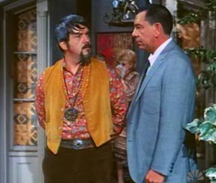
This was a long time ago.
 Light On Dark Water
Leave a reply to Marianne Cancel reply