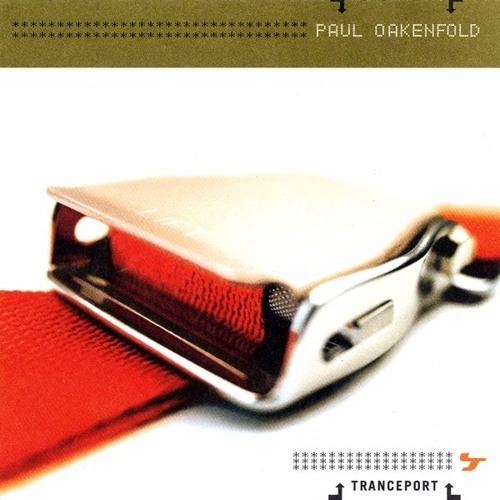
While I like this sort of music a good deal I don’t know much of the technical stuff about it – the lingo escapes me, as do the monikers for the various subgenres. What I do know is that among all the varieties I gravitate towards the material with the recognizable musicality of chord progressions and melodies, or at least semblances of them (not all techno/trance has these qualities).
This particular album came out in 1998 and is considered an early classic of the genre, but I didn’t know that when a friend gave me a copy six or seven years ago. As it turns out it comes in at #23 on Rolling Stones Top 30 all-time list of EDM albums. (EDM stands for “electronic dance music,” now the current term for all music of this general type, including everything from Kraftwerk to Moby to Skrillex.)
You have to listen to this music somewhat differently than other styles, as it doesn’t develop like most Western music. Instead it has more in common with minimalist music, and some threads of its origins can be traced back to musicians experimenting with combinations of minimalism and electronic music.
Not sure how accurate this is but I’ve come to think about it this way: Most music we hear develops from a starting point to an end point: it’s going somewhere, and the various voices, instruments, etc., are arranged in such a way as to get the listener from point A to point B. Trance doesn’t really work that way. The songs are constructed primarily for continuous dancing, and thus are arranged to flow directly from one into another without stopping. Hence, the musical development all happens vertically above the basic axis and not along it, so to speak. Sounds, instruments, and voices are added and subtracted in such a way as to propel the song to the next one, rather than to bring closure. For the casual listener this gives the illusion that the songs are repetitive and “don’t go anywhere,” but if you listen attentively this really isn’t true. It is this for me that makes it listenable and keeps it interesting: how will things be added and subtracted in order to maintain the ongoing motion without the whole thing becoming just an exercise in repetition? This is especially important when most of the songs run six to eight minutes in length, and sometimes longer.
One thing that becomes very noticeable the more one listens is that since the music is generally all in a very strong 4/4 time signature, the changes almost always occur on beats with multiples of four with eights or sixteens being very prominent. Count in your head either two or four measures of four beats and something usually happens, whether very noticeable, like a full stop and restart, or very subtle, like a change in the tone of a keyboard or the addition or subtraction of a percussive sound.
The song “Gamemaster” is a great example of this type of arrangement, in that it is both a very musical piece, and one in which the adds and drops occur regularly and noticeably. The song is at the tempo of eight beats in seven seconds, so it’s slightly faster than 120 bpm, and everything happens in even-numbered multiples of seven. To show how this works here’s a partial list of the adds and drops for the song “Gamemaster” so you can follow along while listening. I’ll say upfront that the spoken voiceover that comes in about half way through is rather silly, but it doesn’t really detract from the song itself. It’s notable that even though the audible beat drops out during this section, the metronome is kept running, and the spoken bit lasts 42 seconds (6 x 7 seconds, or 12 measures).
After the song starts things remain basically static for the first 42 seconds, then:
:42 – a double time (16th note) synth starts
:56 – another different synth comes in
1:10 – beat drops out
1:24 – synth comes in without drum beat
1:38 – high-hat cymbal is added
1:52 – drum beat returns, which leads to first chord change at
1:59 21 seconds later to
2:20 – first appearance of an arpeggiated synth
2:48 some dropouts occur, then more at 3:02.
3:16 – second keychange
3:30 – spoken voiceover begins, lasts 42 (6 x 7) seconds, then full beat kicks back in exactly 8 beats (7 seconds) later.
The remainder of the song roughly follows this same pattern, eventually bringing everything back in and adding a couple new things, including loud piano chords and a high choral female voice, until at the 6:36 mark the “breakdown” begins, gradually stripping away almost everything except the bass drum line, which allows the dj to use this “outro” to blend the song seamlessly into the intro of the next one.
When it’s done well I find this stuff to be very exhilarating, and it’s one of my favorite kinds of music to listen to while driving. I recognize I’m probably in quite the minority hear so your mileage may vary. I often wonder what a guy my age is doing listening to this stuff but I take some comfort in knowing that Paul Oakenfold’s still at it, and that he himself is only a couple years younger than me!
So here’s another one just for the heck of it.
(For more info see the Wikipedia article on “trance music.”)
—Rob Grano has a degree in religious studies which he's put to good use working on the insurance side of the healthcare industry for the past 20 years. He's published a number of book and music reviews, mostly in the small press, and sometimes has even gotten paid for it. He lives outside of Pittsburgh, Pa.
 Light On Dark Water
Leave a reply to Robert Gotcher Cancel reply