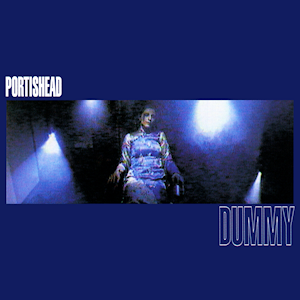
I think I first encountered the term "trip-hop" in a description of this album. I don't remember exactly what the description said, but it was intriguing. I also don't remember if or how I managed to hear a bit of it, as this was in the late '90s or early '00s, before YouTube and various other means of sampling music online were available. (Napster was probably around, but I scorned it; it seemed little different from theft.) It seems unlikely that I would have bought it entirely unheard, but maybe I did.
At any rate I did hear it, and I did like what I heard, and I did buy it, and I did like the whole album, quite a lot. Moreover, I soon learned that I could count on the label "trip-hop" to be pretty much a guarantee that I would like the music to which the label was attached. Not that I would necessarily like the particular instance a great deal, but I would like the basic sound, the basic style, enough to listen to and enjoy even a run-of-the-mill effort.
What is that sound? Well, the name would seem to mean "trippy hip-hop," but the relationship is a little obscure to me, since I don't know that much about hip-hop. I guess it refers at minimum to the slow-ish, smoky, shuffling beats, like those you hear a lot in rap and hip-hop, and to the use of samples. (Dummy also includes scratching, but I don't think that's typical.) "Smoky" is a good adjective in general. Trip-hop tends to be smoky, slow, mysterious, melancholy, somewhat strange, heavy on the electronics, maybe somewhat jazzy. Moody and warm female vocals are favored. Samples of old recordings sometimes give it a nostalgic or retro feel.
At any rate all of that applies to Dummy. the 1994 debut release of Portishead, a three-person group consisting of singer Beth Gibbons, Geoff Barrow, and Adrian Utley. The album is basically a studio concoction put together by the three of them, and I think they have to bring other people on board to perform it live. Barrow is credited with various tasks involving electronics, and Utley usually with guitar and bass. The writing credits go to all three, though I think I read somewhere that Gibbons is the lyricist.
So. A listen will be far more helpful than more verbiage from me in acquainting you with their sound, if you aren't already familiar with it. Here are the first two tracks, which are very representative of the whole, as the album is remarkably consistent in style and quality. The spy-movie-sounding guitar in "Sour Times" is a sample from an album called More Mission Impossible by Lalo Schifrin, who did the famous TV show theme music.
One more. This one is a special favorite because of the surprising and effective quotation from Jude 1:3.
Portishead have not been very prolific. They put out a second album, just called Portishead, three years after this one. I bought it a few years ago but am embarrassed to say that I have yet to hear it. I think part of the reason is that this one album seems such a complete and perfect statement of a particular aesthetic that more almost seems superfluous. There are also a live album and, ten years later, in 2008, one called Third. And Beth Gibbons has a solo album, Out of Season (2002),which I own and have only heard once. It seemed at first hearing rather different from Portishead. I'll get back to it eventually.
I'm having trouble thinking of a lot to say about this album, but it's not for lack of enthusiasm. It's actually one of my favorite popular music recordings. As you can probably imagine if you've listened to these tracks, it's great for listening to in the dark, with a drink in hand. (I don't know, smoke might be more appropriate, but I don't do that.)
–Mac is the proprietor of this blog.
 Light On Dark Water
Leave a reply to Stu Cancel reply