Yesterday I finally started working on a project that's years overdue: going through old notebooks and throwing away everything that doesn't seem worth keeping. The eventual goal of this is to get my office or study or whatever you want to call it into some kind of order, and to clean out one of the two desks there and turn it over to my wife.
(Wait–no, you can't call it whatever you want to. You are forbidden to call it a "man cave.")
The first notebook I took up was a little three-ring binder with roughly 5"x7" paper which I remember using in the late '70s. The contents reveal that it was not long after my conversion/reversion to Christianity, so it was 1978-79; not later than '79, because I remember the little house in Tuscaloosa where we lived at the time, and we moved later in that year. I was 29-30 years old, and an Episcopalian. It would be two or three years before I became Catholic. Here are some notes and excerpts from an essay I was writing:
The contradiction between Christianity and capitalism
The necessity for the Christian not to consider socialism or communism as the alternative to capitalism, but rather Christianity itself
Liberal-socialist and conservative-nationalist Christianity are both submission of the Church to the world.
…the ideas (if such notions can be dignified with that term) which govern the day-to-day behavior as well as the long-term aspirations of most of us are pagan through and through. What are these notions, and where do they come from? They are a wild mixture, having in common only the firm principle that one should be occupied mostly in pleasing oneself, and they come from almost everywhere, from liberal psychologists to conservative capitalists. The psychologist talks of fulfilling one's potential, the capitalist of economic incentives, but in both cases the message is that you have a right to whatever you can get, that the universe in some way owes you a continual increase of goodies. A Christian, I think, is bound to reply that we are owed nothing, that even our very existence puts us in the debt of Another, a debt we can never hope to repay, and that furthermore we continually increase that debt by our wickedness….
It is almost impossible to accumulate wealth without becoming more interested in wealth than anything else. This may apply to a nation as well as to an individual, and I think our own nation is an excellent example–as a nation, we are almost incapable of seeing life in other than economic terms–and when we do, we are often simply resorting to euphemisms, as in the phrase "quality of life," which was once used by social critics in reference to intangibles like the sense of community but which has increasingly come to refer to the number of gadgets and goodies a person or nation can afford to buy, or to the number of hours one has free for the pursuit of pleasure. And if one is devoting more [I guess I meant "most", or "too much"] of one's energy to maintaining and increasing one's wealth, one is disobeying Christ's commandment to love the Lord with all one's heart. We cannot serve two masters–it is as simple and as hopeless as that.
The essay was unfinished, and I don't think much of it is worth preserving. It's all fairly obvious stuff. But it brought home to me why I have to stifle a yawn whenever some Christian discovers, and tells us with great excitement, that American culture, especially in its economic aspects, is in many ways at odds with Christianity. This is often accompanied by the news that the Republican Party is not the Church, and that its program is not a program for advancing the kingdom of God, and may even at times be opposed to it.
This kind of thing usually comes from someone who has been pretty wrapped up in right-wing politics, at least to the extent of thinking that conservative politics is a necessary part of being Christian, and that right-wing policies, including a pretty uncritical support of "capitalism" (not a very well-defined term) are in general Christian ones, and the Republican Party is the vehicle for putting those policies into practice.
As the excerpts above show, I didn't believe that in 1978. I didn't come to believe it afterward, even as the battle lines of the culture war were drawn clearly and starkly. It was therefore never an idea that I needed to get past, as it was for Excited Christian above.
It happens that I am in fact a political conservative (for lack of a better word) and think that in the American context conservatism (for lack of a better word) is preferable to liberalism (for lack of a better word), and that conservatism is more congenial to Christianity than liberalism as both currently work. But I think I can say truthfully that never for a moment have I believed that any political program or party, that any conceivable political reform, was the path to the deep renewal of human life that we long for. It might be able to improve conditions and even ameliorate serious evils, but it could never turn us into good people. It might provide some of the conditions for happiness, but it could never make us happy. Even at the height of my investment in the counter-culture of the 1960s I never saw that revolution as primarily a political one, but rather as a sort of religious movement.
And so when somebody announces as if it were a new discovery that no political party can be conflated with the Church, I agree, but I wonder why they are bothering to say it. It's as if they've just discovered that circles don't have corners and want to tell everybody about it. I want to say "Well sure, obviously. But now what?"
The thing I miss, of course, is that a lot of people apparently do make the mistake that Excited Christian is trying to correct. It really does come as a shock to them that Republican orthodoxy and Christian orthodoxy are not only not the same thing but may be in contradiction. A good number of them, I suspect, are young people who have grown up amid the culture wars and have been hearing since childhood that Republicans Are Good and Democrats Are Bad, and now as adults are seeing things less simplistically, which probably became easier when so many Christians supported Trump so unreservedly. The past year certainly indicates that there are a lot more people who don't fully see the distinction between Republicanism and Christianity, or who are blinded to it by some kind of tribal loyalty, than I had realized.
The left tries to do the same sort of thing, the same sort of conflation of their program with Christianity, but they aren't as convincing, in part because if they are any sort of Christian at all they tend to be nominal or heterodox.
*
There was also this in my notebook:
How mistaken to associate virtue, wisdom, intelligence with what we ordinarily call the intellectual faculty or with aesthetic sensibility. I've known too many semi-literate people who were wise and gentle, too many literary persons who brought to their studies the philosophy and ethics of a mugger.
When I wrote this down I was probably thinking, among other things, of something that had happened at the clinic where I was working part-time as a programmer. (I know I've told this story here at least once, so please bear with me if you remember it.) My desk was in a trailer out back, and I often worked odd hours. Sometimes I was there when the two cleaning women came in. They were past-middle-age black women–I'm sure I would have called them "old" at the time, but now I'd guess they were probably in their late 50s, not young but not exactly elderly. Sometimes they would sit for a bit and we would chat. One night we were talking about the state of the world, which we agreed was declining. "Everything gettin' so high," one of them said, meaning prices–this was the period of high inflation. We listed other signs of trouble. One of them sighed and said "I reckon the Lord'll take care of us. He know we all crazy."
I think that is the single wisest thing I have ever heard anyone say in actual conversation, in my presence (as opposed to something I've read in a book). I suppose hardly a week has gone by since that night that I haven't thought of it. It sums up our situation pretty neatly.
This reminds me of another gem heard many years ago, from a black preacher I heard on the radio: "Folks is not yo' enemy. The devil is yo' enemy." I have heard some great stuff from black preachers on the radio, stuff I very much wish I could have recorded.
*
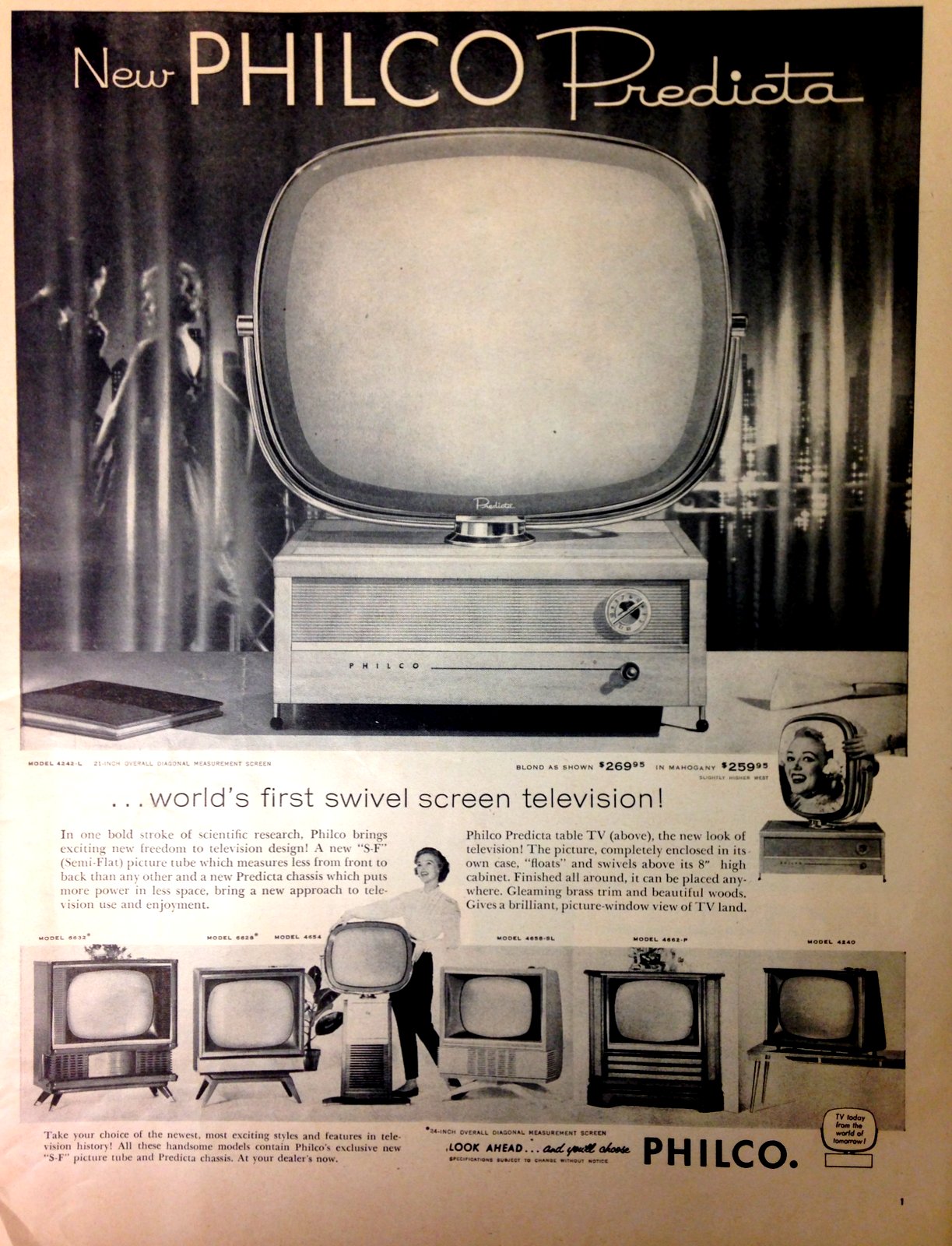
More nostalgia from that 1958 Life magazine.
My parents subscribed to Life. I learned a lot from it. I remember a long and horrifying but morbidly fascinating piece they did in the mid-196os about heroin addicts in New York. Oh my goodness, here it is, at least the photos. February 1965. I was a junior in high school. I remember some of those pictures. I never thought heroin addiction would come to little towns in Alabama.
 Light On Dark Water
Leave a reply to Robert Gotcher Cancel reply