I can't remember whether it was before or after the Ford accusations became public, but at some point a couple of weeks ago I said of the Kavanaugh hearings that their one absolutely certain effect would be a net increase in the amount of hate in this country. Rod Dreher put it a bit more strongly: "When this is over we will all hate each other even more." (At least that's what I think he said. I can't find that exact quote now.)
Well, those prophecies have certainly proved true. No matter what the result of this fiasco is, a huge number of people are going to be enraged and will stay that way. And it's not only those on the losing side: the winners will also feel that their fear and loathing of the others–the Other–will have been fully justified, and that the effort to crush them must not flag. As I said some time ago, all political victories are Pyrrhic now, because they serve to inflame the other side.
I cannot understand how people can fail to see where this is leading. Perhaps it won't be violence, but if it isn't it won't be for lack of hatred to fuel the flames. We are surely destroying the foundations of our system of law and government, which depend on some basic elemental presumptions, such as that we are fellow citizens of one country, and that we have something close to a shared understanding of its principles. We, at least those of us who are most politically engaged, don't seem to have those anymore.
I have a constitutional reluctance to take a stand on questions of material fact where I have no direct knowledge and there's a lot of room for doubt. So I reserve judgment on whether Brett Kavanaugh is guilty of the assault with which he's been charged. But I loathe mob passions and mob behavior, always have done, and am very disturbed by the degree to which they are active now. There's a widespread willingness to say "We know he did it because people like him do things like that." And "people like him" refers to his class, sex, and race. Do people not see where that leads?
Another direction in which this whole mess leads is to the diminishment of the Me Too movement. I've been very much in sympathy with its stated aims, if not its feminist ideological framework. But this dishonestly-handled business tends to discredit it. As Alexandra DeSanctis of National Review wrote:
This debacle is teaching onlookers to take the stories of victims with a grain of salt. How can the average person be expected to care about seeking justice when so many in the public square seem to care more about advancing an agenda than about discerning who has actually been mistreated or abused?
The Me Too movement has gained immense influence over the last year precisely because it has encouraged us to acknowledge the reality of sexual abuse and follow the truth wherever it leads. Now, the question of whether the accusations against Kavanaugh are true has been subjugated to a political endgame. That promises to destroy the cultural power of the Me Too movement.
Surely no reasonable person can believe that Christine Ford's unprovable accusation, whether true or false, was not uncovered and deployed primarily as a weapon to block the confirmation of a justice who would (probably) tip the balance of the Supreme Court decisively rightward. And why? I think everyone knows, though Kavanaugh's opponents in the Senate don't want to say it, that this is above all about Roe v. Wade. I think everyone knows, even if they won't admit it even to themselves, that if Kavanaugh had the endorsement of Planned Parenthood we would never have heard of Christine Ford. A few centuries from now when reasonably dispassionate historians are writing about the dissolution of the United States, that arrogant and imprudent decision will be seen to have been a major factor.
Oh, and by the way: completely lost in this war is the small number of principled conservatives who have serious reservations about Kavanaugh because they think he is far too indulgent of executive power. See this. Few care much about anything except the "social issues" which should not be settled in Washington in the first place.
*
Switching topics rather abruptly: we watched Three Billboards Outside Ebbing, Missouri last night. For the first hour or so (of its nearly two) I was impatient with it. Well done, yes–extremely so, especially the acting. But I'm really pretty sick of the Small-Town White Hick stereotype in movies and TV. In the end, though, it won me over, partly by cleverly undermining the stereotypes. It's not an easy story to watch, its events being rooted in violence, hatred, and revenge. But those don't get quite the last word.
In the comments where we were discussing this a week or two ago, several people mentioned being seriously put off by the language. I'm a little surprised at that, as it didn't seem any worse in that respect than the average movie. It was a bit shocking that the sheriff talked that way in front of his children. But other than that….
*
Something I've been meaning to mention for several weeks: also in recent comments, there was a mention of Eric Clapton. I said I would have more to say about that later. Well, what I meant to say was that anyone who is interested in the sort of flash guitar (I don't know where I got that term but I guess it's reasonably clear) that Clapton represents really should check out Jeff Beck Live at Ronnie Scott's. It's available as an audio CD, but I really recommend that you watch it on DVD. There's more music on the DVD, and watching Beck and his three bandmates (bass, drums, keyboards) is terrific. Here's an example, in which you get to see bass prodigy Tal Wilkenfeld at work. She looks like she's about fourteen but actually she was twenty-one when this was recorded in 2008.
I do wish Beck had not worn that sleeveless shirt and given the audience so many glimpses of his armpits. And does anybody know who that woman in the audience at the very end is? She seems familiar. I did recognize several people in the audience, including Jimmy Page (not in this clip), and there were several others on whom the camera focused, leading me to believe that I was supposed to recognize them.
Rock fans (at least those of a certain age) have a tendency to argue about which of the three former Yardbirds guitarists–Clapton, Beck, and Page–is the greatest. Well, if that discussion is limited to the music of the '60s and '70s, it could go on forever. But if the question is who's the most interesting now–well, in my opinion it's clearly Beck. Clapton himself said once that "When he's on, there's nobody better." Agreed.
This concert has a guest appearance by Clapton, by the way. Also Joss Stone and Imogen Heap. The DVD includes some interviews which I found quite interesting. One gives the impression that the old rivalries of the Yardbirds days still have a bit of life in them, at least in Beck's mind.
It looks like the entire concert is available on YouTube at the moment. Not an official page so it may not be there indefinitely.
*
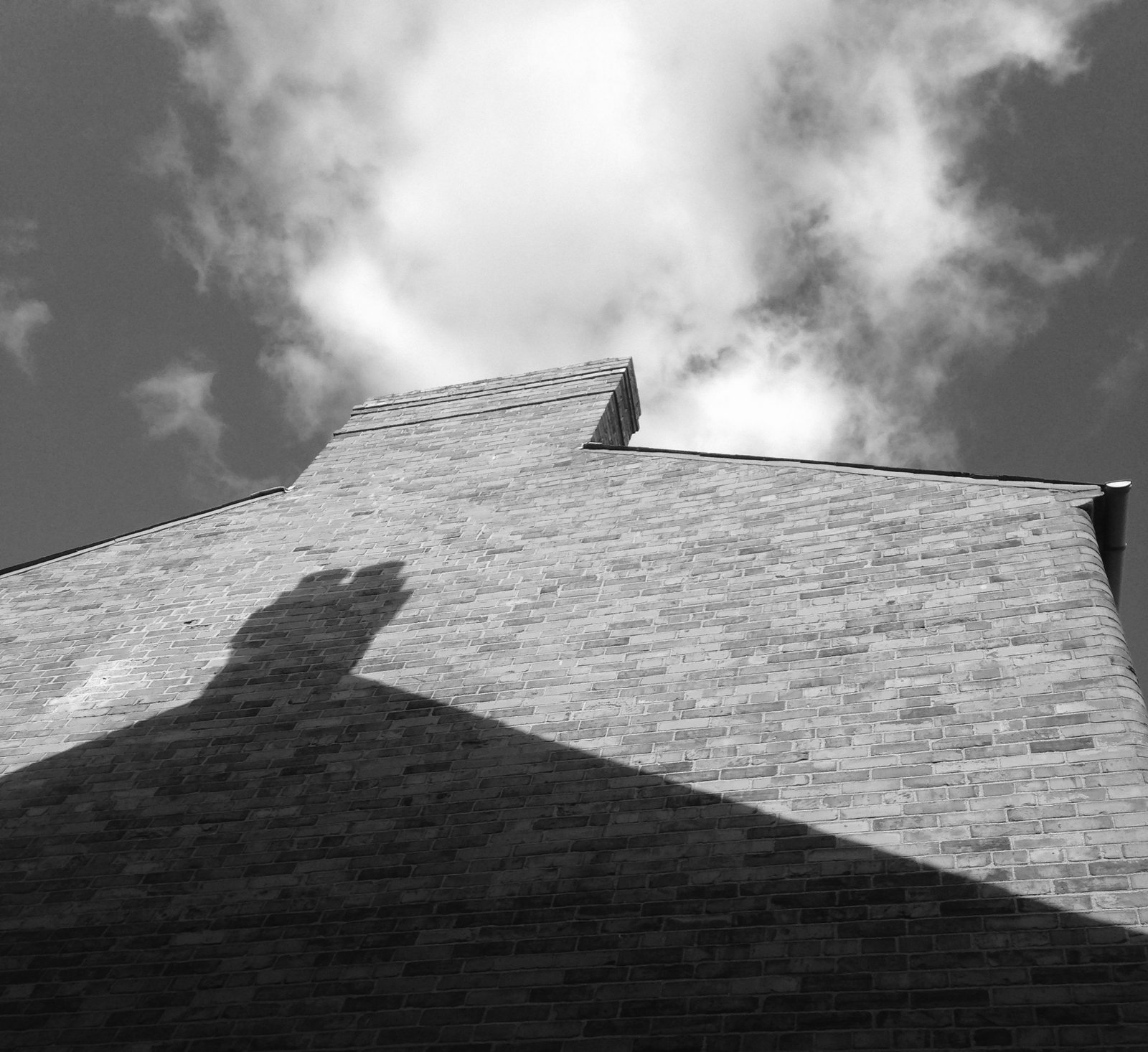
A building somewhere in Belfast. I just liked the image.
 Light On Dark Water
Leave a reply to Janet Cancel reply