No pun on the word "sweet" intended, though the piece is classifiable as a suite, though not called such.
I'm a little embarrassed to say that I've subscribed to yet another online streaming service, this one for classical music only. I already had Pandora Plus, the paid version of Pandora, which, unlike the free Pandora service, is like Spotify and all the rest, allowing you to pick what you want to hear out of an enormous range of music. But also like those others, it doesn't handle classical music very well. Cataloging classical recordings like pop songs makes finding what you want anywhere from cumbersome to really pretty frustrating. And I find it mildly annoying to see a classical composition or section of a composition–any one track from a recording–referred to as a "song," as in this Pandora listing:
Beethoven: Symphony 9 ("Choral")
Album by Fritz Reiner
4 songs – 1994
This new service (new to me anyway) is called IDAGIO (they seem to like to capitalize it that way), and it's really good. It approaches perfection as a classical music application. Just to state the most obvious advantage, recordings are organized by composer, performer, instruments, and genre. There is no separate listing of recordings by name, but the general search tool will usually find specific recordings if that's what I'm after.
There is a standalone Windows app, but the web app seems to be pretty much identical. And there's an iPhone app. They do have a free service, which is very much worth checking out if you're at all interested. I assume it intersperses ads with the music. I hope it doesn't interrupt the music with ads, which would be intolerable. That actually happened to me the other day when I was listening to something on YouTube, and I think I actually yelled in shock, because of course the advertisement was significantly louder than the classical piece I was trying to hear. The yell may have been a curse. (I was listening to YouTube, through the TV, because my stereo is broken!! This is pretty awful but I'm coping.)
I started this post with the intention only of discussing a Bach piece which I had just heard for the first time. But I thought I ought to mention IDAGIO because that was where I discovered the piece. Prominently displayed among the New Releases is this one from ECM New Series:
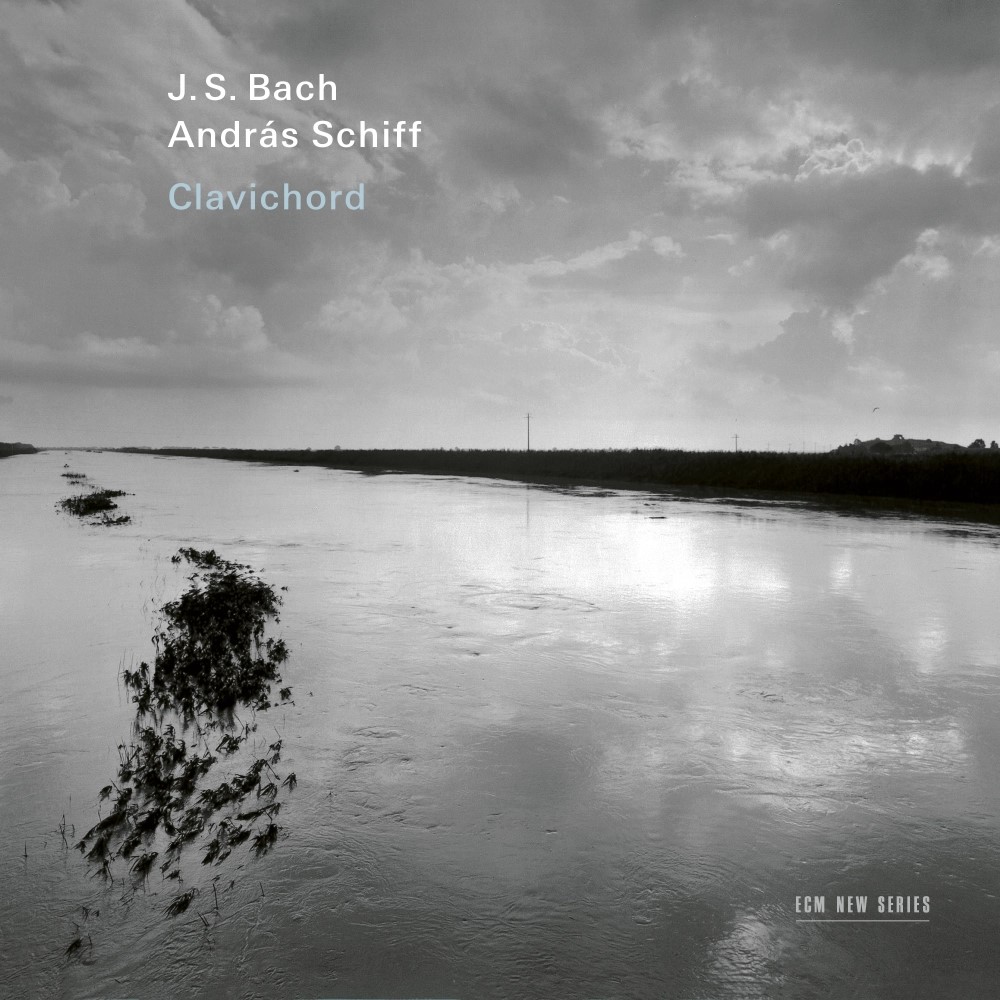
I will generally listen to anything on ECM at least once, and this was intriguing.
An entire album of Bach keyboard pieces played on the clavichord seemed at first an odd thing, as it's a fairly limited instrument. But, well, why not? Historically it is, I assume, more correct than Bach on the piano. And Bach himself played it, though we (or at least I) think of his keyboard music (apart from organ works) as being composed for the harpsichord. All I can tell you about the difference is that the clavichord mechanism strikes the strings, while the harpsichord plucks them, and that the clavichord is quieter and more delicate. The sound is fairly similar: if I'd heard this album without knowing what it was, and without listening very closely, I would have assumed I was hearing a harpsichord.
The first piece on the album is the suite I mentioned, "Capriccio on the departure of a beloved brother" in B flat major, BWV 992. I thought on first hearing that it's a delightful, fairly simple, pretty piece, and that if I hadn't know it's Bach he would not have been my first guess. Rameau or Couperin, maybe. "Simple" is not usually a word brought to mind by Bach's music. This is the earliest known piece by him, written when he was nineteen, on the occasion of his brother Johann Jacob's departure to join the army, and its six sections have a program meant to portray the departure. You can read all about it here. Wikipedia says that the story attached to the piece is "questionable," but if Bach himself wrote the explanations of the movements, there must be something to the story.
Andras Schiff's clavichord recording is not on YouTube, but this one on piano is.


Leave a comment